Home > Shape layers (part 2)

Luisa Winters

Instructor and consultant for Adobe products

linkedin-icon

Shape layers (part 2)

Create visual elements using a variety of tools such as the Pen and vector editing tools.
This summary is AI generated

Learning Outcomes:

  • Create visual elements using shape layers
  • Modify shapes with fills and strokes
  • Convert vector layers into shape layers

Level: Intermediate

Skills you'll gain:

After Effects, Shape Layers, Vector Graphics, Gradients

Key Insights

  • Use solid layers for basic shapes in After Effects.
  • Shape layers allow unique modifications not possible with other layers.
  • Center the anchor point in new shape layers via preferences.
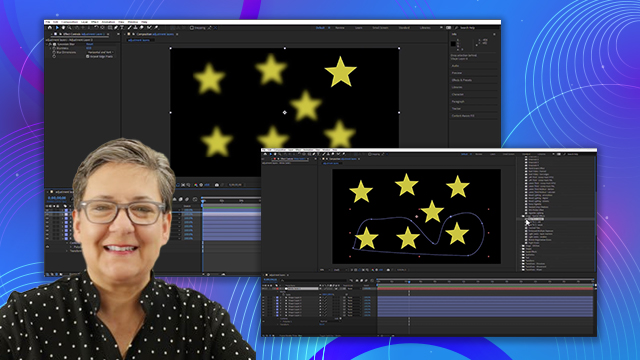
  • Add multiple fills and strokes to a single shape layer.
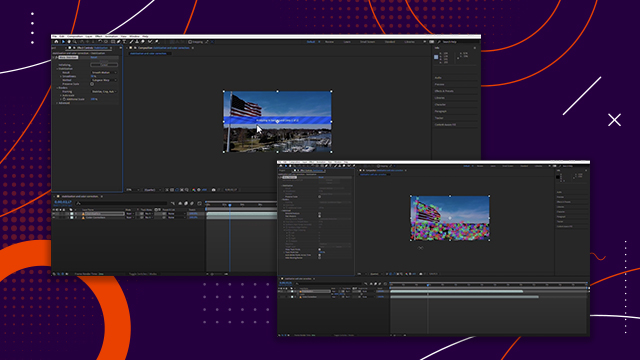
  • Continuously rasterize vector layers to maintain quality when scaling.
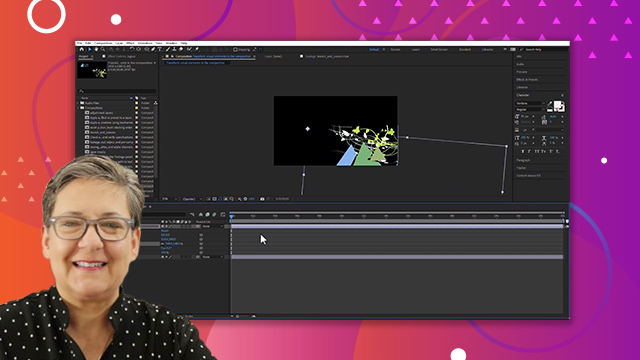
  • Convert Illustrator files to shape layers for advanced editing.
  • Select specific elements within a shape layer for targeted modifications.
  • Experiment with gradients for dynamic visual effects.
  • Understand the difference between vector and raster graphics in After Effects.

Learning outcomes

  • Create visual elements using shape layers
  • Modify shapes with fills and strokes
  • Convert vector layers into shape layers

Key insights

  • Use solid layers for basic shapes in After Effects.
  • Shape layers allow unique modifications not possible with other layers.
  • Center the anchor point in new shape layers via preferences.
  • Add multiple fills and strokes to a single shape layer.
  • Continuously rasterize vector layers to maintain quality when scaling.
  • Convert Illustrator files to shape layers for advanced editing.
  • Select specific elements within a shape layer for targeted modifications.
  • Experiment with gradients for dynamic visual effects.
  • Understand the difference between vector and raster graphics in After Effects.

Skills

After Effects, Shape Layers, Vector Graphics, Gradients

Transcript

[00:00:00] [Music]

[00:00:00] thank you

[00:00:00] [Music]

[00:00:00] hello and welcome to this after effects

[00:00:00] certification preparation series of

[00:00:00] videos I'm Louisa Winters in this video

[00:00:00] I want to start objective four objective

[00:00:00] four and that is about creating a

[00:00:00] modifying visual elements so in here is

[00:00:00] where we really work with After Effects

[00:00:00] so this objective covers core tools and

[00:00:00] functionality of the application as well

[00:00:00] as tools that affect the visual

[00:00:00] appearance of composition elements so

[00:00:00] let's go ahead and get started with

[00:00:00] objective 4.1 4.1 a to be more exact and

[00:00:00] that is to use core tools and features

[00:00:00] to create content and create visual

[00:00:00] elements using a variety of tools we're

[00:00:00] going to talk about solids shape layers

[00:00:00] and creating shapes from Vector layers

[00:00:00] so let's get to after effects in After

[00:00:00] Effects let's go ahead and open the

[00:00:00] composition named

[00:00:00] solids shapes from Vector layers and all

[00:00:00] of that so let me actually make this a

[00:00:00] little bit wider in this column wider so

[00:00:00] that we can read the name of the

[00:00:00] composition it's quite long so solids

[00:00:00] shape layers and creating shapes from

[00:00:00] Vector layers to open this just double

[00:00:00] click it and of course I'm using the

[00:00:00] exercise files that you can download

[00:00:00] from my Google Drive the link is in the

[00:00:00] description of this video of course if

[00:00:00] you haven't downloaded these files if

[00:00:00] you don't want to download these files

[00:00:00] that's quite all right all you have to

[00:00:00] do is create a composition and start

[00:00:00] following me with you know a little an

[00:00:00] illustrator file a shape layer and of

[00:00:00] course a solid so this is what I have in

[00:00:00] here and the only reason why I have

[00:00:00] these here is because I want you to see

[00:00:00] the icons to the left of the layer name

[00:00:00] see this one here is an illustrator icon

[00:00:00] this one is a star that is your visual

[00:00:00] indication that this is a shape layer

[00:00:00] and yeah I know it's called I am a shape

[00:00:00] layer but you know just pay attention to

[00:00:00] the icon and of course this one is a

[00:00:00] solid so like I said we're not really

[00:00:00] doing anything other than looking at

[00:00:00] these icons so let's just select all of

[00:00:00] these and delete

[00:00:00] we have created solid layers before but

[00:00:00] in case you missed that video to create

[00:00:00] a solid layer it's just layer new solid

[00:00:00] look at the shortcut which is Ctrl or

[00:00:00] command Y and there you go choose the

[00:00:00] size choose the color give it a name

[00:00:00] whatever so I'm not going to create a

[00:00:00] solid because we've done it plenty of

[00:00:00] times so I'm just going to cancel out of

[00:00:00] this

[00:00:00] let's however talk about shape layers

[00:00:00] shape layers are unique in After Effects

[00:00:00] they can do things that no other layer

[00:00:00] can do so let's experiment with only

[00:00:00] some of these and you know before we get

[00:00:00] started let me just tell you I'm going

[00:00:00] to go a little bit beyond what the test

[00:00:00] is going to take you but still I'm not

[00:00:00] going to take you through everything

[00:00:00] that is to be known about shape layers

[00:00:00] it's just some things that I consider to

[00:00:00] be super important so if no layer is

[00:00:00] selected in the timeline or otherwise

[00:00:00] and you draw a mask you're not drawing a

[00:00:00] mask you're drawing a shape layer so if

[00:00:00] I just go here and obviously I have no

[00:00:00] layers selected because I have no layers

[00:00:00] in this composition and I just grab one

[00:00:00] of these masking tools and I click and

[00:00:00] drag well that's a shape layer all right

[00:00:00] so let me undo that let me just draw a

[00:00:00] shape layer like here in the in this

[00:00:00] corner do you see where the Anchor Point

[00:00:00] is is in the middle of the composition

[00:00:00] as soon as I release my mouse button

[00:00:00] Boom the Anchor Point jumps to the

[00:00:00] middle of the shape layer that is a

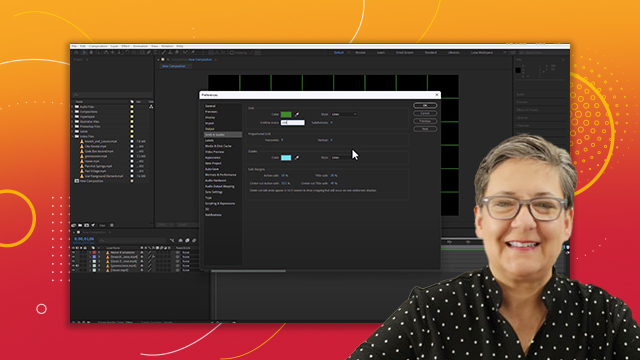
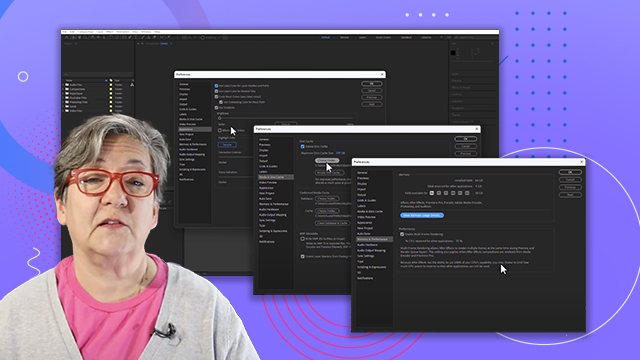
[00:00:00] preference so if you go to edit

[00:00:00] preferences General and on the Mac After

[00:00:00] Effects preferences General you will see

[00:00:00] a setting in here that lets you Center

[00:00:00] The Anchor Point in New shape layers

[00:00:00] this is not checked by default I like

[00:00:00] checking it you know but I'll leave that

[00:00:00] up to you that's why they're called

[00:00:00] preferences because you prefer to have

[00:00:00] it this way or that other way so I'm

[00:00:00] just going to cancel out of this

[00:00:00] and now I'm going to delete this shape

[00:00:00] layer

[00:00:00] it doesn't matter how you create it it

[00:00:00] could be with a pen tool it could be

[00:00:00] with any of these tools you can also

[00:00:00] create a shape layer by going layer new

[00:00:00] well it helps if I have the composition

[00:00:00] selected right layer new shape layer and

[00:00:00] there you go

[00:00:00] notice that this shape layer even though

[00:00:00] it's there see how it's called shape

[00:00:00] layer one it's completely empty I can

[00:00:00] start adding stuff to that by actually

[00:00:00] drawing in here or by going to this add

[00:00:00] menu all right so this is what it's

[00:00:00] really going beyond what the test is

[00:00:00] going to take you through but it's good

[00:00:00] to know I can add

[00:00:00] a group a rectangle an ellipse a polyst

[00:00:00] or a path can I draw them yes of course

[00:00:00] I can but of course but I can also add

[00:00:00] them after I add that say a rectangle

[00:00:00] right which is just a small uh Square

[00:00:00] here in the middle of the of the layer I

[00:00:00] can then add a fill to that I can add a

[00:00:00] stroke a gradient fill a gradient stroke

[00:00:00] yes I can have gradient fills and

[00:00:00] strokes so I can add those things all

[00:00:00] right so I'm just going to delete that

[00:00:00] now if I just draw it before or after I

[00:00:00] draw it it doesn't really matter say I'm

[00:00:00] going to draw it like this right and

[00:00:00] then I go oh no you know what I didn't

[00:00:00] want a fill to be the solid I I wanted a

[00:00:00] a that that fill to be a gradient well I

[00:00:00] can click on the word fill the word not

[00:00:00] that little Swatch no the word fill and

[00:00:00] now I can choose from no fill

[00:00:00] solid which is what we have right now to

[00:00:00] a linear gradient see linear gradient

[00:00:00] look I can even change the blending mode

[00:00:00] of that fill

[00:00:00] I know

[00:00:00] I can also have a radial gradient all

[00:00:00] right so these are of course gradients

[00:00:00] that I was working with before chances

[00:00:00] are that if you do this and you've never

[00:00:00] worked with gradients before you're

[00:00:00] gonna get a grayscale gradient but it

[00:00:00] doesn't matter the point is that you can

[00:00:00] have a linear gradient a grade A radial

[00:00:00] gradient or a solid and you can change

[00:00:00] the blending mode and the opacity of

[00:00:00] this fill

[00:00:00] super cool say I want to leave it as a

[00:00:00] solid right and now I select that I can

[00:00:00] add another fill

[00:00:00] I can add another fill and look now I

[00:00:00] have two builds in that layer and I can

[00:00:00] now click here and I can say no you know

[00:00:00] this fill has to be whatever uh let's

[00:00:00] say green

[00:00:00] but that's a solid fill well I can click

[00:00:00] on the word fill and I can change it to

[00:00:00] say a radial gradient

[00:00:00] see what I'm saying so if I change it to

[00:00:00] a radial gradient Now understand that I

[00:00:00] am going to fill 2 not fill one and that

[00:00:00] what is selected here see how fill one

[00:00:00] is selected here and then I have another

[00:00:00] one called fill two so I can just edit

[00:00:00] them independently from each other and I

[00:00:00] can just go to fill 2 and I can go no

[00:00:00] you know what I changed my mind you need

[00:00:00] to be a solid and now I can go to fill

[00:00:00] one and I can say hey you know what I

[00:00:00] want you to be a different color and

[00:00:00] this also change to fill one but

[00:00:00] whatever and I can just change these

[00:00:00] things of course it's not changing why

[00:00:00] not go ahead and change and now I have

[00:00:00] two fills one is blue one is green and

[00:00:00] now I can change those blending modes

[00:00:00] the important thing here that I really

[00:00:00] want to communicate is that you can add

[00:00:00] different things to the shape layer and

[00:00:00] the depending on what is selected you

[00:00:00] can modify that all right so let's give

[00:00:00] you a different example I'm going to

[00:00:00] draw I don't know an ellipse right I'll

[00:00:00] make it a

[00:00:00] I'll make it a a circle right I press

[00:00:00] the shift key as I was drawing it and

[00:00:00] that's a perfect circle

[00:00:00] with that layer selected I can add other

[00:00:00] things I can for example add a rounded

[00:00:00] rectangle right let me make it really

[00:00:00] rounded and that is part of that same

[00:00:00] shape layer

[00:00:00] and I can select both of those

[00:00:00] independently so I can expand the

[00:00:00] ellipse and I can go to the ellipse path

[00:00:00] and I can say oh you know what I'm going

[00:00:00] to move you

[00:00:00] I only moved the ellipse not the rounded

[00:00:00] rectangle and I can move it in the X and

[00:00:00] the Y I can change this size

[00:00:00] I can change its color because you see

[00:00:00] this has a fill and I can go oh you know

[00:00:00] what I don't want you to be blue I want

[00:00:00] you to be red whatever so it's part of

[00:00:00] the same shape layer but now I have two

[00:00:00] separate shapes two different colors and

[00:00:00] one could be a gradient one could be a

[00:00:00] solid

[00:00:00] whatever all right

[00:00:00] there are other things that I can add

[00:00:00] and the best thing to see this is with

[00:00:00] the Stars so you know

[00:00:00] um

[00:00:00] this is a flower not a star if I want to

[00:00:00] reset the star double click it double

[00:00:00] click it see it then you can delete this

[00:00:00] then you can click and drag leave the

[00:00:00] mouse button down right

[00:00:00] so now I'm going to press and hold Ctrl

[00:00:00] which is command on the Mac see how now

[00:00:00] my rays are pointier up Arrow I have

[00:00:00] more rays

[00:00:00] left Arrow see how the curvature goes

[00:00:00] right arrow see how the curvature goes

[00:00:00] all right so all of these things are

[00:00:00] because

[00:00:00] I have my mouse button down and I am

[00:00:00] modifying the shape as I draw okay so

[00:00:00] let's say I want it like this whatever

[00:00:00] I'm going to make it about yay big boom

[00:00:00] The Anchor Point centers and I'm good I

[00:00:00] can now select that shape layer click on

[00:00:00] the word fill and I can say oh you know

[00:00:00] what give me a radial gradient

[00:00:00] and I click OK and if I zoom in you see

[00:00:00] that the center is yellow and the

[00:00:00] outside is white I can click now on the

[00:00:00] Swatch and I can change these properties

[00:00:00] for example I don't want for this color

[00:00:00] to be that orangey I want it to be say

[00:00:00] reddish and I select that color stop

[00:00:00] and then I choose the color right I can

[00:00:00] add another color stop say here and I

[00:00:00] can say well you know what I want that

[00:00:00] to be blue or white or black or whatever

[00:00:00] it is and how much the gradient itself

[00:00:00] will be depends on where I have these

[00:00:00] color stops and how

[00:00:00] abrupt the gradient will be like for

[00:00:00] example let me put this red say here and

[00:00:00] now I'm going to put this let me do that

[00:00:00] by the way to delete a color stop just

[00:00:00] drag it out

[00:00:00] and now I'm going to put this really

[00:00:00] close to it do you see how there is like

[00:00:00] no gradient whatsoever

[00:00:00] so the more apart the color stops are

[00:00:00] the more

[00:00:00] the gradient we see in between the two

[00:00:00] colors so if I delete the bloom

[00:00:00] and I Go just with the red say I'm going

[00:00:00] to go here and now I'm going to bring

[00:00:00] the white really close to it I mean that

[00:00:00] is almost like Japanese flag thing right

[00:00:00] so if I want a more gradient I separate

[00:00:00] these more and there you have it so I

[00:00:00] want this color stop really to be more

[00:00:00] orangey because I really want like a

[00:00:00] daisy like type thing

[00:00:00] and there you go so now I have my flower

[00:00:00] whatever right and I'm going to zoom out

[00:00:00] so you can see it better with it

[00:00:00] selected and remember we can select the

[00:00:00] different elements I can select a poly

[00:00:00] star and if I have another polystar or

[00:00:00] another ellipse or whatever I can select

[00:00:00] it right

[00:00:00] I'm just going to do it with one so that

[00:00:00] we don't get confused but remember we're

[00:00:00] gonna Target whatever we have selected

[00:00:00] and if we have the layer selected then

[00:00:00] we target everything so this has the

[00:00:00] polystore selected this has the layer

[00:00:00] selected in fact you know what I think

[00:00:00] I'm going to draw another polystar just

[00:00:00] so that you see the difference

[00:00:00] I have polystar one polystar two right

[00:00:00] I'm going to now select the layer the

[00:00:00] layer itself see how none of these are

[00:00:00] selected now I'm going to add

[00:00:00] say apocryone blood pucker and bloat and

[00:00:00] there it is

[00:00:00] I can change the amount so you see how

[00:00:00] both

[00:00:00] my flowers are being uh targeted both of

[00:00:00] them all right so I'm going to undo that

[00:00:00] or just delete the Pokemon bloat right

[00:00:00] there you go now I'm going to address

[00:00:00] only polystar one do you see how

[00:00:00] polystar 2 is not selected only polystar

[00:00:00] one is selected now this I'm going to

[00:00:00] Target just that so add

[00:00:00] poker and bloat

[00:00:00] this is now affecting only that one

[00:00:00] polystar or that one flower not both so

[00:00:00] in After Effects you have to Target you

[00:00:00] have to select you have to click on

[00:00:00] whatever it is that you want to be

[00:00:00] affected

[00:00:00] but what by whatever it is that you're

[00:00:00] doing in this case is the poker and

[00:00:00] blood so I'm gonna delete polystar 2

[00:00:00] just click on it press the delete key

[00:00:00] and there it is and I can keep on adding

[00:00:00] because I only have one polystar only

[00:00:00] one thing I can Target the whole layer

[00:00:00] and it doesn't matter I could do either

[00:00:00] do this or click on the polystore and

[00:00:00] it's not going to make a difference

[00:00:00] because well I only have one thing in it

[00:00:00] and I can keep on adding things so add

[00:00:00] say twist and I can just add the twist

[00:00:00] to that so it looks like yay

[00:00:00] and that's kind of cool so notice that

[00:00:00] you can add these things to the shape

[00:00:00] layers That's Unique in After Effects

[00:00:00] you can't really add things to other

[00:00:00] layers again unique to After Effects and

[00:00:00] again I could add a stroke to this I

[00:00:00] could add another polystore an ellipse a

[00:00:00] rectangle

[00:00:00] whatever it is and there are many so

[00:00:00] there's not just a Twist there's wiggle

[00:00:00] path wiggle transform zigzag there's a

[00:00:00] ton of things I'm not going to go

[00:00:00] through all of them because you know

[00:00:00] that's really not part of the test but

[00:00:00] just know that shape layers are unique

[00:00:00] and you can start adding stuff and you

[00:00:00] can create really really really cool

[00:00:00] things using shape layers

[00:00:00] now speaking of shaped layers

[00:00:00] we can grab Illustrator files

[00:00:00] say the logo

[00:00:00] and we can turn that vector layer into a

[00:00:00] shape

[00:00:00] all right so we can turn Vector layers

[00:00:00] into shapes how do we do that well easy

[00:00:00] right click create create shapes from

[00:00:00] vector layer now before we do that I'm

[00:00:00] gonna tell you it's not going to work

[00:00:00] with every single layer and here we go

[00:00:00] boom the text disappears

[00:00:00] the text disappears we could not turn

[00:00:00] the text into a shape layer why is that

[00:00:00] right so this may happen to you if

[00:00:00] you're working with Illustrator files

[00:00:00] well let's select the logo here in the

[00:00:00] project panel and now let's go edit edit

[00:00:00] original edit original

[00:00:00] After Effects it's going to open this

[00:00:00] file in illustrator so it's going to

[00:00:00] open it in illustrator if you don't have

[00:00:00] illustrator installed yeah go ahead and

[00:00:00] do it actually you need illustrator to

[00:00:00] work in After Effects all right so here

[00:00:00] we go here's the text layer the text

[00:00:00] layer is different if I select that you

[00:00:00] immediately see that I can change the

[00:00:00] font I can change the size in other

[00:00:00] words this is like a live text

[00:00:00] and those you can't turn into shape

[00:00:00] layers in After Effects so what we need

[00:00:00] to do is convert this into a regular

[00:00:00] plain vanilla layer

[00:00:00] before I do that I'm going to do a save

[00:00:00] as so file

[00:00:00] save us and I'm going to call it logo 2

[00:00:00] Logo 2 because I don't want to mess with

[00:00:00] the original you know except here except

[00:00:00] if you're following along accept the

[00:00:00] defaults click OK and there you have it

[00:00:00] so I have the text layer selected now I

[00:00:00] can go to object expand

[00:00:00] expand both the object and the fill

[00:00:00] there you go save it Ctrl or command s

[00:00:00] and now let's go back to After Effects I

[00:00:00] can import Ctrl I command I and I'm

[00:00:00] going to import it as footage and I'm

[00:00:00] going to merge all the layers because it

[00:00:00] doesn't really matter I'm going to put

[00:00:00] it in the timeline I'm going to delete

[00:00:00] these other two and I'm going to do

[00:00:00] exactly the same thing so this is now

[00:00:00] the new layer that we created in

[00:00:00] illustrator so same thing right click

[00:00:00] create

[00:00:00] shapes from vector layer

[00:00:00] Boom the text comes along and now I can

[00:00:00] delete the illustrator a layer and I'm

[00:00:00] left with my shape layer and that's

[00:00:00] really really really cool because now I

[00:00:00] can use all of these ad things into all

[00:00:00] of these contents and look I have all of

[00:00:00] these groups right I have all of these

[00:00:00] things and by the way I have all of

[00:00:00] these groups because

[00:00:00] I have all these letters and each letter

[00:00:00] turned into a group

[00:00:00] if I don't want to do that say oh no I

[00:00:00] really wanted the triangles to be

[00:00:00] separate and blah blah blah you already

[00:00:00] know how to import Illustrator files all

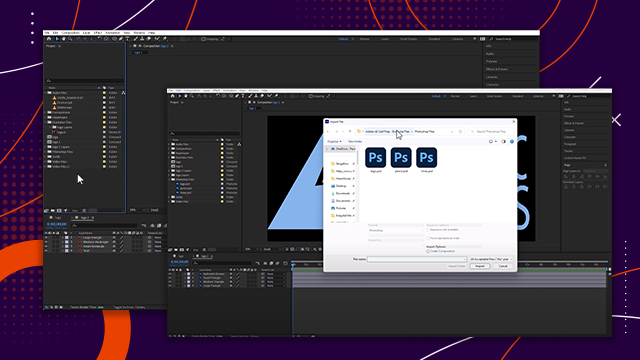
[00:00:00] right so here we go file import

[00:00:00] controller command I click on Logo 2 not

[00:00:00] footage but composition layer size there

[00:00:00] you go and now we have a composition

[00:00:00] named logo 2.

[00:00:00] that has all of our separate elements I

[00:00:00] can select all of the elements right

[00:00:00] click create

[00:00:00] shapes from vector layer there you have

[00:00:00] it I can delete now the illustrator

[00:00:00] counterparts and now each one of them is

[00:00:00] separate and I can even select all of

[00:00:00] them click on ADD and let's say twist I

[00:00:00] usually add twist because it's the

[00:00:00] easiest to see and now I can expand the

[00:00:00] Twist on all of them

[00:00:00] I don't really have to but I'll expand

[00:00:00] the Twist on all of them I'm going to

[00:00:00] make this a little bit taller and I'm

[00:00:00] going to select

[00:00:00] all of these twists

[00:00:00] like Yay just click and drag

[00:00:00] and now I can twist all of them at the

[00:00:00] same time

[00:00:00] you can animate this or not right you

[00:00:00] can just do a very little like

[00:00:00] um

[00:00:00] waving around you could put a little

[00:00:00] wiggle expression in here whatever it is

[00:00:00] the point is that you can convert

[00:00:00] these files

[00:00:00] these Vector files into shape layers and

[00:00:00] they they have all of the properties of

[00:00:00] a shape layer all right so before moving

[00:00:00] on I want to make sure that I mention

[00:00:00] something about Vector layers all right

[00:00:00] so I'm going to select all of these

[00:00:00] delete and there you have it and now I'm

[00:00:00] going to put an illustrator file it

[00:00:00] doesn't matter which one into the

[00:00:00] timeline I'll use Vines because you know

[00:00:00] we haven't used those this is a vector

[00:00:00] file it was created in illustrator and

[00:00:00] you know and a vector file is not made

[00:00:00] out of pixels right you already know

[00:00:00] that there are mathematical equations

[00:00:00] and we can make them as big as we want

[00:00:00] and we won't lose resolution they're not

[00:00:00] going to look pixelated because they're

[00:00:00] not made out of pixels

[00:00:00] let's see if that's true

[00:00:00] s for scale and I'm just going to make

[00:00:00] this much bigger

[00:00:00] look at this it's it's already looking

[00:00:00] pixelated I mean look at that

[00:00:00] I mean what gives right

[00:00:00] so this is the thing and what you need

[00:00:00] to understand about how After Effects

[00:00:00] thinks

[00:00:00] first of all if you can see it in your

[00:00:00] computer monitor it's not Vector I mean

[00:00:00] let's just put that clear out there

[00:00:00] because you can't see Vector files

[00:00:00] because Vector files by definition are

[00:00:00] not made out of pixels and if they're

[00:00:00] not made out of pixels and all our

[00:00:00] computer screens display as pixels then

[00:00:00] how are we going to see them we can't so

[00:00:00] what we see is a raster representation

[00:00:00] of that Vector file so our computer

[00:00:00] programs after effects illustrator

[00:00:00] Photoshop whatever it is they rasterize

[00:00:00] in other words turn into pixels whatever

[00:00:00] Vector file we have so that we can see

[00:00:00] what after effects does is that it

[00:00:00] rasterizes the file that illustrator

[00:00:00] file or that whatever file you have

[00:00:00] at its native scale in other words at

[00:00:00] 100 and when you scale it up you're

[00:00:00] scaling the raster and not the vector in

[00:00:00] other words you're scaling pixels

[00:00:00] what you need to tell After Effects is

[00:00:00] hey After Effects stop it

[00:00:00] don't do that don't do that I need you

[00:00:00] to scale the vector and then rasterize

[00:00:00] again so that I can see it I need you to

[00:00:00] continuously rasterize that's the words

[00:00:00] I want to Remember to Remember

[00:00:00] continuously rasterize and that's this

[00:00:00] little guy see the switches if you don't

[00:00:00] see the switches and modes click on the

[00:00:00] button down here if you don't see the

[00:00:00] button right click the column header go

[00:00:00] to column and make sure that you see

[00:00:00] switches all right so here we go as soon

[00:00:00] as I select this little

[00:00:00] thingy in other words the little check

[00:00:00] box under it

[00:00:00] boom there you go

[00:00:00] continuously rasterize if you leave your

[00:00:00] mouse cursor on top of that look at the

[00:00:00] tooltip for comp layer collapse

[00:00:00] Transformations and for vector layer

[00:00:00] continuously rasterize that's what we

[00:00:00] want so I call this the little sunshine

[00:00:00] because it looks like a little sunshine

[00:00:00] This Little Light of Mine almost always

[00:00:00] let it shine let Shine Let It Shine

[00:00:00] so

[00:00:00] if we had a text layer right so I'm

[00:00:00] going to delete that if we had text

[00:00:00] right I'm just gonna type text and in

[00:00:00] fact this composition is kind of small

[00:00:00] so I'm going to go to composition

[00:00:00] settings I'll choose whatever 8K doesn't

[00:00:00] matter do you see how the little

[00:00:00] sunshine is checked

[00:00:00] but it's also grayed out you can't shut

[00:00:00] it out so when you create a vector file

[00:00:00] inside of After Effects whether it's

[00:00:00] text or even a shape layer

[00:00:00] the continuously rasterizes already

[00:00:00] turned on and you can't shut it off it's

[00:00:00] when you import something from outside

[00:00:00] of After Effects whether it's the logo

[00:00:00] whether it's the vined and then you

[00:00:00] scale that it just goes oh yeah yeah

[00:00:00] yeah you know it doesn't work

[00:00:00] This Little Light of Mine almost always

[00:00:00] let it shine all right so

[00:00:00] okay so I think this brings us to the

[00:00:00] end of this video thank you for watching

[00:00:00] and I'll see you on the next video

[00:00:00] [Music]

[00:00:00] thank you

Explore Other Tutorials