Home > Preferences

Luisa Winters

Instructor and consultant for Adobe products

linkedin-icon

Preferences

Navigate, organize, and customize the application workspace and configure application preferences.
This summary is AI generated

Learning Outcomes:

Learning outcomes not available.

Level: Intermediate

Skills you'll gain:

Skills not available.

Key Insights

Key insights not available.

Learning outcomes

Learning outcomes not available.

Key insights

Key insights not available.

Skills

Skills not available.

Transcript

[00:00:00] [Music]

[00:00:00] thank you

[00:00:00] [Music]

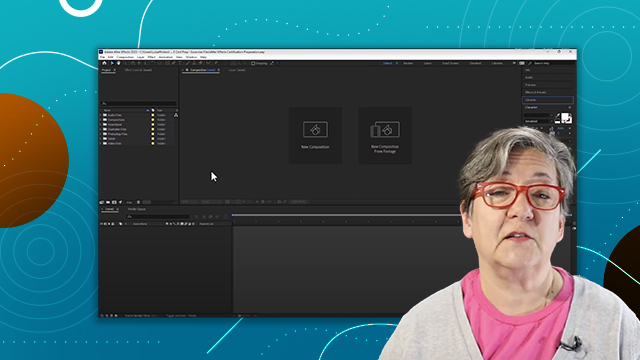
[00:00:00] hello and welcome to this after effects

[00:00:00] certification preparation series of

[00:00:00] videos I'm Louisa Winters in this movie

[00:00:00] I want to talk about objective 2.2 C

[00:00:00] which is configuring application

[00:00:00] preferences we're going to talk about

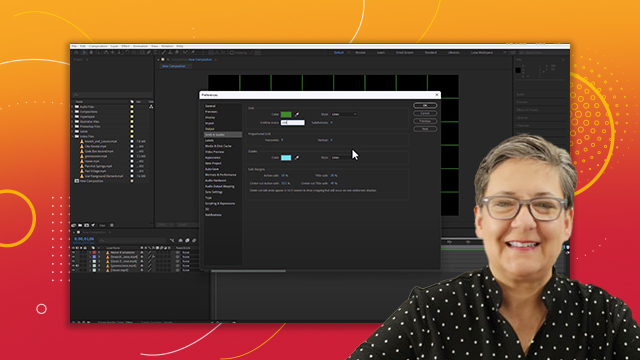
[00:00:00] appearance auto save grids and guides a

[00:00:00] media disk and cache memory previews and

[00:00:00] other things so let's get us started if

[00:00:00] we want to open preferences here in

[00:00:00] After Effects on Windows go on to edit

[00:00:00] preferences and we're going to go to

[00:00:00] appearance on the Mac go to after

[00:00:00] effects preferences appearance and now

[00:00:00] once the preferences open up you will be

[00:00:00] able to change the appearance for

[00:00:00] example you can use label colors for

[00:00:00] layer handles and paths etc etc and you

[00:00:00] can this one is important you can cycle

[00:00:00] The Mask colors so if you don't have

[00:00:00] this selected every time you draw a mask

[00:00:00] it's going to be the the same color well

[00:00:00] if this is selected you know you can

[00:00:00] have different colors every time you

[00:00:00] draw a mask you can change the

[00:00:00] brightness of the interface I don't like

[00:00:00] it brighter you can affect the label

[00:00:00] Colors by this brightness slider

[00:00:00] you can also change the brightness of

[00:00:00] the highlight color and you can make it

[00:00:00] brighter or darker

[00:00:00] if you click on the default buttons then

[00:00:00] it goes back to what it ships with which

[00:00:00] is default so let's go ahead and also

[00:00:00] change the focus indicators see this is

[00:00:00] the that rectangle on the outside of

[00:00:00] that word sample you can make it

[00:00:00] brighter or darker I really like the

[00:00:00] defaults so I'm going to leave it at

[00:00:00] defaults

[00:00:00] there are other things that I want to

[00:00:00] show you in here that you may want to

[00:00:00] pay attention to under general for

[00:00:00] example you can change the path point

[00:00:00] and handle sizes so you can make them

[00:00:00] bigger they don't have to be five pixels

[00:00:00] I can change it to a 15. you can show or

[00:00:00] hide the tooltips so the tool tips are

[00:00:00] just the little pop-ups that appear when

[00:00:00] you hover your mouse on top of something

[00:00:00] you know like um

[00:00:00] say the selection tool do you see how it

[00:00:00] gives me a pop-up telling me Oh this is

[00:00:00] the selection tool and its shortcut is

[00:00:00] the letter V so that would be a tool tip

[00:00:00] if I go back to my preferences General

[00:00:00] there are other things in here that you

[00:00:00] may want to change just for your display

[00:00:00] for example you can default the

[00:00:00] interpolation to linear we're going to

[00:00:00] talk about this a little bit later on

[00:00:00] we're talking about a newer version of

[00:00:00] After Effects this one is important

[00:00:00] center The Anchor Point in New shape

[00:00:00] layers we're going to discuss this when

[00:00:00] we talk about shape layers and you can

[00:00:00] also use the system Color Picker as

[00:00:00] opposed to adobe's so you know I would

[00:00:00] recommend that you go over these things

[00:00:00] and see what what

[00:00:00] auto save is super important right so

[00:00:00] how many Auto saves do you want and how

[00:00:00] often do you want for the auto save to

[00:00:00] to go if you are in a system that

[00:00:00] crashes constantly I am going to suggest

[00:00:00] that you lower that number to something

[00:00:00] like five minutes and then you have a

[00:00:00] higher uh project version than five and

[00:00:00] we're already discussed grids and guides

[00:00:00] but we need to talk about media on this

[00:00:00] cache we need to talk about memory and

[00:00:00] we need to talk about previews so let's

[00:00:00] go ahead and go back onto After Effects

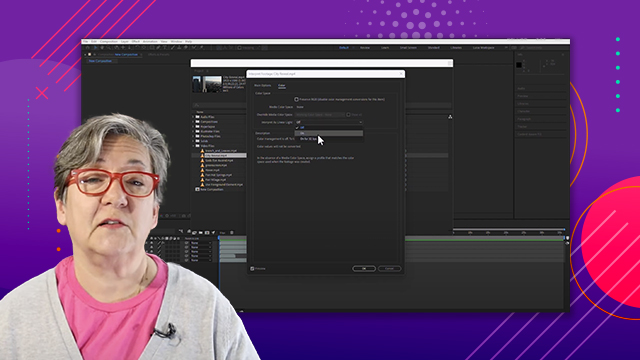
[00:00:00] and now I'd like to go to media and disk

[00:00:00] cache remember on the Mac is under After

[00:00:00] Effects preferences media and disk cache

[00:00:00] and once the preference is open in here

[00:00:00] you can see where After Effects is

[00:00:00] saving that media cache and what the

[00:00:00] maximum cash size is going to be a lot

[00:00:00] of people choose a folder that is on an

[00:00:00] external drive usually an SSD drive

[00:00:00] outside of the system otherwise

[00:00:00] especially if you're working on a laptop

[00:00:00] your C drive your your laptop drive

[00:00:00] becomes full very very quickly and you

[00:00:00] won't know why and yeah it's all those

[00:00:00] cache files that are accumulating in

[00:00:00] there and you can empty the disk cache

[00:00:00] from in here all right so the conform

[00:00:00] media cache as well notice that this one

[00:00:00] is going to my home folder updata local

[00:00:00] temp and this one is going to my home

[00:00:00] folder update at roaming Adobe Harman

[00:00:00] common meaning that is going to be not

[00:00:00] just for After Effects but for other

[00:00:00] Adobe applications as well so that's the

[00:00:00] database and here is the cache and

[00:00:00] notice that it's going to the same place

[00:00:00] and you can clean the database and cache

[00:00:00] by clicking in here as well and that's

[00:00:00] just going to do a cleanup of those

[00:00:00] folders it's going to delete those files

[00:00:00] for you

[00:00:00] this is a good thing to do for

[00:00:00] troubleshooting so if you're having

[00:00:00] issues with after effects or Premiere

[00:00:00] Pro for that matter I will go into these

[00:00:00] folders and know that you don't have to

[00:00:00] remember where these folders are all you

[00:00:00] have to do is go to the preferences and

[00:00:00] there is the path right there right so

[00:00:00] and you can just delete them from there

[00:00:00] so if I were to delete mine and I'm

[00:00:00] going to do that now I would go go to my

[00:00:00] C drive

[00:00:00] users Luisa

[00:00:00] app data and by the way if you don't see

[00:00:00] the app data go to view and then show

[00:00:00] and make sure that hidden items is

[00:00:00] checked make sure that you can see the

[00:00:00] hidden items this is for Windows

[00:00:00] obviously so updata and then I'm going

[00:00:00] to go to local

[00:00:00] and now temp

[00:00:00] and I have a ton of things in here right

[00:00:00] so I can select them all delete them and

[00:00:00] that's going look at this the 60 over 60

[00:00:00] gigs right so uh right now it's telling

[00:00:00] me Oh I can't delete this one because

[00:00:00] it's been used by another program yeah I

[00:00:00] have After Effects open so I'm just

[00:00:00] going to skip that and it's just

[00:00:00] recycling all these things so I'm just

[00:00:00] going to skip all of these

[00:00:00] I'm gonna close out of here and continue

[00:00:00] with my preferences here you can write

[00:00:00] XMP extensible metadata protocol that's

[00:00:00] an adobe thing IDs on files and import

[00:00:00] or not that's off by default you can

[00:00:00] also create layer markers from footage

[00:00:00] XMP metadata so if you need layer

[00:00:00] markers and that you created in a

[00:00:00] different program then you can bring

[00:00:00] them in by simply clicking in here all

[00:00:00] right let's go to video preview

[00:00:00] you can enable the Mercury transmit

[00:00:00] which means that if you have a DV device

[00:00:00] connected you can actually send this

[00:00:00] video stream outside of your computer

[00:00:00] monitor and you can change the settings

[00:00:00] Hardware is supported or not 24p

[00:00:00] conversion if you're doing a 3-2 pull

[00:00:00] down then you can use that particular

[00:00:00] conversion method this is really outside

[00:00:00] of the scope of the test so I'm going to

[00:00:00] deselect this you know you could video

[00:00:00] preview during the render queue output

[00:00:00] this is the one that is really in scope

[00:00:00] so if you're rendering in the in the

[00:00:00] queue and you find that it's too slow

[00:00:00] it's using too many system resources or

[00:00:00] whatever you can deselect this video

[00:00:00] preview and then the video won't play

[00:00:00] while is rendering alrighty let's go on

[00:00:00] to memory and performance I have 64

[00:00:00] gigabytes of RAM installed in this

[00:00:00] system and most of them are are going to

[00:00:00] Adobe applications so I have 58

[00:00:00] gigabytes of RAM reserved for that and

[00:00:00] for everything else I have six I I can

[00:00:00] raise this number so that less is

[00:00:00] available for Adobe programs but of

[00:00:00] course I don't want to do that so I'm

[00:00:00] just going to lower that number to as

[00:00:00] low as the preferences let me now I can

[00:00:00] show the memory usage so you can see how

[00:00:00] much after effects is using and how much

[00:00:00] team projects is using which is

[00:00:00] absolutely nothing because I'm not using

[00:00:00] team projects

[00:00:00] you can enable multi-frame rendering so

[00:00:00] the CPU reserve for other applications

[00:00:00] could be just 10 percent and multi-frame

[00:00:00] rendering it allows after effects to

[00:00:00] render multiple frames at the same time

[00:00:00] so obviously you can see how fast or how

[00:00:00] much faster this would be so this is for

[00:00:00] preview and the render queue so

[00:00:00] depending on the speed of your CPU this

[00:00:00] can actually increase your performance

[00:00:00] quite a bit

[00:00:00] if you're having issues with audio go to

[00:00:00] the audio hardware and you can change

[00:00:00] how you want for the output to be right

[00:00:00] now I have my speakers from my laptop

[00:00:00] being the output but I also have a

[00:00:00] Yamaha connected to this which is

[00:00:00] connected to speakers and that acts as a

[00:00:00] line out so I could use the Yamaha as an

[00:00:00] out so you know I can I also have a

[00:00:00] Scarlet box a 6i6 connector via USB and

[00:00:00] I also have speakers connected to that

[00:00:00] so I could change these to whatever I

[00:00:00] want for now I'm just going to leave it

[00:00:00] at the system default there are other

[00:00:00] preferences in here that you should look

[00:00:00] at previews is one of them you can

[00:00:00] change the Adaptive resolution to be

[00:00:00] whatever it is

[00:00:00] you can also check on the GPU

[00:00:00] information I have an Nvidia RTX A3000 I

[00:00:00] have a wonderful Dell laptop that it's

[00:00:00] just unbelievable it's the 5770 and I

[00:00:00] recommend it to anyone and no I'm not

[00:00:00] getting paid to say that you can also

[00:00:00] show internal wireframes as you do a

[00:00:00] fast preview or not and you can change

[00:00:00] the viewer quality the zoom quality to

[00:00:00] more accurate or faster

[00:00:00] you can also change the color management

[00:00:00] from faster to more accurate to even

[00:00:00] more accurate so you know you can

[00:00:00] actually take charge of how your system

[00:00:00] is displaying things you can also change

[00:00:00] the composition switches so that it

[00:00:00] automatically enables frame blending and

[00:00:00] motion blur rendering and this is kind

[00:00:00] of important because sometimes we forget

[00:00:00] to turn those on uh while this is just

[00:00:00] going to do it automatically so kind of

[00:00:00] important you can mute the audio when

[00:00:00] the preview is not real time I actually

[00:00:00] like doing that so I'm going to leave

[00:00:00] that on and you can also start caching

[00:00:00] frames when idle so you know how long do

[00:00:00] you want it to be idle before it starts

[00:00:00] happening the default is eight seconds

[00:00:00] and the cache frames could be around the

[00:00:00] current time indicator from the start of

[00:00:00] the range from whatever and you can also

[00:00:00] change what the cat cash range will be

[00:00:00] if it's going to be just the work area

[00:00:00] or the work area extended by the current

[00:00:00] time so the work area and where the

[00:00:00] current time indicator is that's the

[00:00:00] playhead if we go to display we can tell

[00:00:00] it to uh display the motion paths or not

[00:00:00] and if it's going to display the motion

[00:00:00] path by how long you can display

[00:00:00] thumbnails in the project panel or not

[00:00:00] and you can also show the rendering

[00:00:00] progress in the panel and flowchart

[00:00:00] chart and of course you can read the

[00:00:00] rest of these here they're kind of

[00:00:00] important so if I were you I would just

[00:00:00] look through all of these not

[00:00:00] necessarily only for the test but for

[00:00:00] your own information and so that you can

[00:00:00] make the performance of After Effects a

[00:00:00] little bit better to suit your needs and

[00:00:00] how you want to work

[00:00:00] and this brings me to the end of this

[00:00:00] video thank you for watching and see you

[00:00:00] on the next video

[00:00:00] [Music]

Explore Other Tutorials