Home > Editing

John Knowles

Adjunct Lecturer - The American Film Institute

linkedin-icon

Editing

Learn the basic differences between Avid Media Composer and Premiere Pro. You'll also learn how to customize your keyboard and UI to fit your needs.

This summary is AI generated

Learning Outcomes:

Learning outcomes not available.

Level: Advanced

Skills you'll gain:

Skills not available.

Key Insights

Key insights not available.

Learning outcomes

Learning outcomes not available.

Key insights

Key insights not available.

Skills

Skills not available.

Transcript

[00:00:00] hi I'm John N software trainer for Adobe

[00:00:00] and in this video I'll be talking all

[00:00:00] about editing in Premiere Pro and this

[00:00:00] is geared specifically towards editors

[00:00:00] coming from Avid media composer now

[00:00:00] switching between the different software

[00:00:00] can be really difficult especially when

[00:00:00] you find that your muscle memory from

[00:00:00] one nle does not apply to the other very

[00:00:00] easily it's almost like learning a new

[00:00:00] language don't worry I'm here to help

[00:00:00] one of the first things we need to talk

[00:00:00] about are the differences in terminology

[00:00:00] between the two

[00:00:00] programs in Avid you work in bins bins

[00:00:00] contain all of your footage and

[00:00:00] sequences and you sort that inside the

[00:00:00] bin typically in folders a collection of

[00:00:00] bins is called a project but in Premiere

[00:00:00] Pro things are a little bit different

[00:00:00] what you would call a bin in Avid is

[00:00:00] called a project in Premiere Pro a bin

[00:00:00] in Premiere Pro is definitely not the

[00:00:00] same as a bin in Avid it's a folder

[00:00:00] inside a premere pro project that can

[00:00:00] hold Media or sequences or whatever you

[00:00:00] want to put in there but it does not

[00:00:00] exist at the desktop level the way that

[00:00:00] bins do in Avid they're only inside the

[00:00:00] project file and a collection of project

[00:00:00] files that can be used in a

[00:00:00] collaborative environment is known as a

[00:00:00] production this is often one of the

[00:00:00] hardest things for Avid editors to wrap

[00:00:00] their heads around as they're moving

[00:00:00] into Premiere Pro and little things like

[00:00:00] the difference in terminology between

[00:00:00] project and Bin can get a little

[00:00:00] confusing whenever you hear project in

[00:00:00] Premiere Pro just try to think of bin in

[00:00:00] Avid land they're the same thing now

[00:00:00] let's talk about the difference in

[00:00:00] Project settings in AV you set up an

[00:00:00] overall project with a specific frame

[00:00:00] rate and frame size and all the

[00:00:00] sequences you create will be locked into

[00:00:00] that unless you decide to change it but

[00:00:00] in Premiere Pro it's more open we don't

[00:00:00] have to lock ourselves into anything and

[00:00:00] a Premiere Pro project can contain

[00:00:00] multiple sequences at different sizes

[00:00:00] and different frame rates let me show

[00:00:00] you where to change the settings in

[00:00:00] Premiere if you go to file production

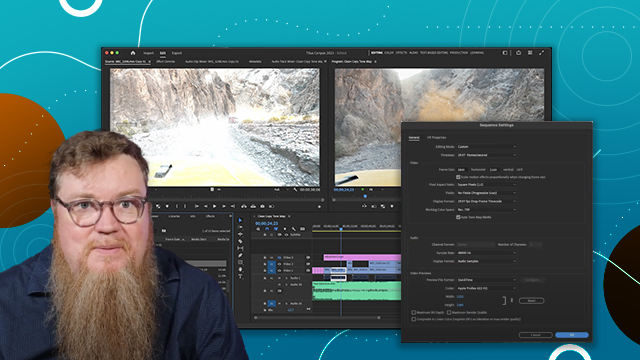
[00:00:00] settings or project settings I'm in a

[00:00:00] production right now so this would say

[00:00:00] project settings if it was a standalone

[00:00:00] project and here under General you'll

[00:00:00] see there's nothing there that talks

[00:00:00] about frame rate or frame size uh aspect

[00:00:00] ratio audio all it is is how you display

[00:00:00] your time code how to display your audio

[00:00:00] and some settings there for custom title

[00:00:00] and action safe there's some options

[00:00:00] there for how you want to view your

[00:00:00] color and then scratch discs and ingest

[00:00:00] which is not available in a production

[00:00:00] and that's it you don't have to set a

[00:00:00] frame rate or frame size here in these

[00:00:00] project settings you can decide that on

[00:00:00] a sequence by sequence basis once you

[00:00:00] start a premere pro

[00:00:00] project so I can go in here to my

[00:00:00] project panel create a new sequence and

[00:00:00] this first one can be a regular HD 1080p

[00:00:00] sequence at

[00:00:00] 23976 and I'll just label

[00:00:00] that really quick

[00:00:00] there hit okay and then in right away I

[00:00:00] can also create another sequence

[00:00:00] that is 4K HDR at the same frame

[00:00:00] rate and both those sequences can be

[00:00:00] inside the same Premiere Pro project

[00:00:00] which again is like a bin in Avid now

[00:00:00] obviously the interface in Premiere Pro

[00:00:00] is different than Avid and it's going to

[00:00:00] take a little bit of time to get used to

[00:00:00] that but it does feature some of the

[00:00:00] same customization that you're used to

[00:00:00] in Avid you can move panels around

[00:00:00] around put them in different places and

[00:00:00] also float panels if you'd like to have

[00:00:00] them as free floating windows instead of

[00:00:00] just docked like everything else

[00:00:00] Premiere Pro is built on a system of

[00:00:00] docked panels if you move them around

[00:00:00] they'll each Dock and each panel group

[00:00:00] here will move together when you change

[00:00:00] the width like so everything just kind

[00:00:00] of snaps around it's very elastic if you

[00:00:00] prefer more of the the floating panel

[00:00:00] style from Avid you can click on the h

[00:00:00] hurger menu next to the name of any of

[00:00:00] the panels and choose to undock so now

[00:00:00] my project panel is undocked and I can

[00:00:00] move that around put that where I would

[00:00:00] like it and I can even move that to a

[00:00:00] second Monitor and make it full screen

[00:00:00] over there if you get a configuration of

[00:00:00] panels that you like you can go under

[00:00:00] window workspace and save as a new

[00:00:00] workspace and then your set of custom

[00:00:00] panel configurations will be saved you

[00:00:00] can even assign a keyboard shortcut to

[00:00:00] it and go back to it at any time and if

[00:00:00] you spend a little bit of time moving

[00:00:00] things around you may be able to get

[00:00:00] something that is close

[00:00:00] to an avid configuration this isn't

[00:00:00] exactly like an avid workspace but it's

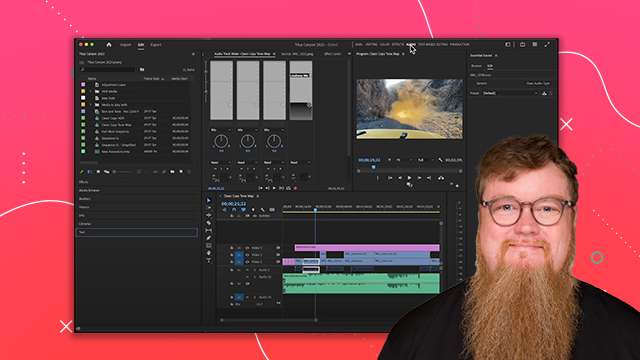
[00:00:00] pretty darn close we've got the toolbar

[00:00:00] here across the center we have

[00:00:00] horizontal audio meters nice wide

[00:00:00] timeline Source program and some of the

[00:00:00] room options over here on the right that

[00:00:00] take us to color and sound for example

[00:00:00] and the project panel which again is

[00:00:00] like the bin in Avid is docked up here

[00:00:00] in the upper right and you can tear that

[00:00:00] off and put that somewhere else if you

[00:00:00] would prefer now let's talk about the

[00:00:00] timeline panel because that's we're

[00:00:00] going to be doing the majority of your

[00:00:00] work in Premiere Pro here I have a

[00:00:00] sequence open in the timeline panel and

[00:00:00] you'll notice there's obviously a few

[00:00:00] key differences here first and foremost

[00:00:00] we don't have the time code bar at the

[00:00:00] bottom of the panel like we do in Avid

[00:00:00] and we also don't have source and record

[00:00:00] side buttons it may look that way but

[00:00:00] this left side here are Source Patches

[00:00:00] from The Source monitor here I see I

[00:00:00] have a clip loaded that has no audio so

[00:00:00] there is no patch here for the audio

[00:00:00] side if I do load a clip that does have

[00:00:00] audio in it you'll see that you have a

[00:00:00] patch there for the audio and you can

[00:00:00] move that around accordingly but this

[00:00:00] other column here next to the locks is

[00:00:00] not the record side that's something

[00:00:00] else called targeting and I'll explain

[00:00:00] targeting in a moment but essentially

[00:00:00] targeting affects Clips once they're

[00:00:00] already on the timeline line and the

[00:00:00] left side The Source patching effects

[00:00:00] Clips when they're bringing brought in

[00:00:00] from the source monitor but there is no

[00:00:00] record toggle in Premier Pro and the

[00:00:00] other thing you'll notice is is that

[00:00:00] there are track names here you see I've

[00:00:00] named my audio tracks dialogue one two

[00:00:00] sound effects music so on but when

[00:00:00] they're that at their default height

[00:00:00] those are hidden so one thing I

[00:00:00] recommend is to spend some time

[00:00:00] customizing the interface and that

[00:00:00] includes the a AIO headers here when the

[00:00:00] tracks are this skinny you will not see

[00:00:00] the labels so right click here in this

[00:00:00] gray area and go to

[00:00:00] customize and there you have a little

[00:00:00] browser where you can pull in different

[00:00:00] buttons and pull out the buttons that

[00:00:00] you don't want for example I rarely do

[00:00:00] voiceover recording directly into my

[00:00:00] timeline I'm going to grab that

[00:00:00] microphone and pull it out sometimes you

[00:00:00] have to reset here we go and there we go

[00:00:00] the microphone has been pulled out and I

[00:00:00] can see the track label over here I'll

[00:00:00] pull that in to the

[00:00:00] right and I'll move the syn lock

[00:00:00] down to the middle the sync lock isn't

[00:00:00] super important for the way that I like

[00:00:00] to edit and I don't want to accidentally

[00:00:00] click the sync lock and throw something

[00:00:00] out of sync now that I have this

[00:00:00] modified audio track header if I do want

[00:00:00] to see the syn lock or other icons that

[00:00:00] I load here in the center I just need to

[00:00:00] open open it up by double clicking and

[00:00:00] shift double click opens all of them to

[00:00:00] the same height or closes them down but

[00:00:00] now that the track name has been moved

[00:00:00] over to the right here I can see it even

[00:00:00] though these tracks are at their minimal

[00:00:00] height and the same thing up here for

[00:00:00] video tracks there's less options when

[00:00:00] you customize these so we can pull that

[00:00:00] sync lock down like we did before and we

[00:00:00] can move the track name up to that

[00:00:00] higher level and now if I want to label

[00:00:00] my video tracks I can do that as well

[00:00:00] and the sync locks again are hidden

[00:00:00] until I pop that track wide open now

[00:00:00] while we're talking about the interface

[00:00:00] let's talk about the keyboard shortcuts

[00:00:00] I go here under the Premiere Pro menu or

[00:00:00] the file menu on Windows Premiere Pro is

[00:00:00] available on Mac and you see there is

[00:00:00] the keyboard shortcuts this is the

[00:00:00] keyboard shortcuts viewer and you assign

[00:00:00] uh shortcuts down here on the left you

[00:00:00] look and see what shortcuts are

[00:00:00] available that don't already have a

[00:00:00] keyboard shortcut assign or if there is

[00:00:00] one you can decide if you like that or

[00:00:00] not and just exit out and assign it to a

[00:00:00] new key and you can do that just by

[00:00:00] dragging and dropping over an available

[00:00:00] key like so and then if you click on

[00:00:00] that key over here on the right you'll

[00:00:00] see everything that's been assigned to

[00:00:00] it including any modifier Keys now this

[00:00:00] is my custom layout here you can also

[00:00:00] pull up the Avid media composer shortcut

[00:00:00] layout which ships with Premiere Pro

[00:00:00] this is an older version for now there

[00:00:00] may be a newer version uh coming in the

[00:00:00] software that's a more up-to-date

[00:00:00] version of media composer but this at

[00:00:00] least will get you started from a base

[00:00:00] that you're used to and you can build

[00:00:00] from there and again just find the

[00:00:00] shortcut you want over here on the left

[00:00:00] hand side and drag and drop it over an

[00:00:00] available key and if you have a fullsize

[00:00:00] keyboard the number pad and plus and

[00:00:00] minus Keys over here on the right are

[00:00:00] also available now when it comes to

[00:00:00] editing Premier Pro is very flexible if

[00:00:00] you prefer to use the source Monitor and

[00:00:00] rely on In-N-Out points on the timeline

[00:00:00] no problem you can cut that way all day

[00:00:00] day if you would want to just drag from

[00:00:00] The Source monitor to the timeline you

[00:00:00] can do that you can drag directly from

[00:00:00] the bins if you want to if you prefer to

[00:00:00] use keyboard shortcuts for all your

[00:00:00] editing and trimming you can do that or

[00:00:00] you can just use the mouse any way you

[00:00:00] want to work Premiere Pro can

[00:00:00] accommodate you all right I've got a

[00:00:00] sequence here I'm starting to assemble

[00:00:00] this short film I already have a few

[00:00:00] Clips on the timeline and I need to add

[00:00:00] this shot of the office building prior

[00:00:00] to these clips here so going up to the

[00:00:00] source monitor I just double clicked on

[00:00:00] that down here in my bin and again a bin

[00:00:00] in Premiere Pro is the same as a a

[00:00:00] folder in Avid it's just a way to

[00:00:00] collect all the footage here all of my

[00:00:00] shots here are in this bin marked uh

[00:00:00] editing project overtime media and I

[00:00:00] loaded that up here and I'll just set a

[00:00:00] few quick In-N-Out points uh I want to

[00:00:00] get past the little traffic shots there

[00:00:00] yeah just so those cars clear the shot

[00:00:00] and I'll just use my keyboard shortcut I

[00:00:00] to set an endpoint and scrub down here

[00:00:00] just after the shot kind of lands and

[00:00:00] I'll set an out point in this case I'll

[00:00:00] use the bracket instead down below and

[00:00:00] the transport controls either way will

[00:00:00] get me there I could also use the o key

[00:00:00] as the keyboard shortcut now down here

[00:00:00] on the timeline I'm going to go ahead

[00:00:00] and put an inpoint here and I'll put an

[00:00:00] outp point right next to that clip so

[00:00:00] it's going to drop right in there with

[00:00:00] no Gap and I can choose either insert or

[00:00:00] overwrite I have keyboard shortcuts

[00:00:00] assign there or I can just use the handy

[00:00:00] little buttons down here at the bottom

[00:00:00] of the source window I'm just going to

[00:00:00] choose overwrite and I get this fit clip

[00:00:00] dialogue box basically something is not

[00:00:00] the same length and the source is longer

[00:00:00] than the destination so this box will

[00:00:00] always pop up and just ask you what

[00:00:00] you'd like to do you can change the

[00:00:00] speed you can ignore either inpoint or

[00:00:00] either outp point in this case I kind of

[00:00:00] like where that shot started so I'm

[00:00:00] going to ignore the sequence inpoint so

[00:00:00] that the length of the shot that goes

[00:00:00] into the timeline is the length that I

[00:00:00] chose up here in the source monitor and

[00:00:00] if I want to always do that I can click

[00:00:00] this box here and this fit clip dialog

[00:00:00] box will not pop up in the future and it

[00:00:00] will always respect whatever choice I

[00:00:00] just made if I want to have maximum

[00:00:00] flexibility I will not check that now so

[00:00:00] that I always get this fit clip option

[00:00:00] by the way if you do choose always use

[00:00:00] this choice and you regret that later no

[00:00:00] problem there's a setting in the

[00:00:00] preferences to restore this

[00:00:00] box okay there we are so that just

[00:00:00] dropped onto the timeline right there

[00:00:00] and as I mentioned there's different

[00:00:00] ways to do that I just use in andout

[00:00:00] points and an insert command very

[00:00:00] quickly I'm going to select that clip

[00:00:00] and delete it I can also just have

[00:00:00] dragged and dropped like

[00:00:00] so and Pull It in there's a little bit

[00:00:00] of magnetic snapping here that happens

[00:00:00] on the timeline the option for this is

[00:00:00] the snap button which is the little

[00:00:00] magnet up here there's also a keyboard

[00:00:00] shortcut to disable that I have it

[00:00:00] mapped to n and turn that on or off and

[00:00:00] when the snapping is on uh the clips

[00:00:00] will get close to each other and

[00:00:00] immediately snap together you can still

[00:00:00] pull and do an overwrite it just takes a

[00:00:00] little more Force to do that and I

[00:00:00] mentioned you don't have to even pull in

[00:00:00] from the source monitor here's that clip

[00:00:00] down here in the bin notice if I scrub

[00:00:00] over it I get a view of the shot and

[00:00:00] you'll see there's a little blue line in

[00:00:00] there it respects the In-N-Out points

[00:00:00] that were previously set up here in the

[00:00:00] source window so if I pull it from the

[00:00:00] bin it's going to be the same length

[00:00:00] that I had set up here all right I'm

[00:00:00] going to keep editing this short film

[00:00:00] here uh by the way I have all my Clips

[00:00:00] arranged here in icon view so I can see

[00:00:00] them nice and big there is also a list

[00:00:00] view down here in this bin or I should

[00:00:00] say folder and I can go back and forth

[00:00:00] like so and I can change the sort order

[00:00:00] with that little drop down right there

[00:00:00] right now they're just in sort of a

[00:00:00] random user order if I change that to

[00:00:00] name that will be alphabetical and these

[00:00:00] are labeled with their uh shot number

[00:00:00] and take which is uh really helpful and

[00:00:00] I can use this slider to increase the

[00:00:00] preview size of that

[00:00:00] thumbnail like so

[00:00:00] so and incidentally there is a shortcut

[00:00:00] if you use the Premier Pro defaults it

[00:00:00] is the uh Tilda key which is below the

[00:00:00] Escape key in the upper leftand corner

[00:00:00] of the keyboard that will pop any active

[00:00:00] panel full screen and you can toggle

[00:00:00] back and forth there's the timeline if I

[00:00:00] just want to see it by itself or one of

[00:00:00] the viewers there's source and program

[00:00:00] in this case I want to look at the

[00:00:00] project bin here which is full of all my

[00:00:00] clips

[00:00:00] and I want to find the that first shot

[00:00:00] which is let's see where is it where is

[00:00:00] it where is it there it is right there

[00:00:00] okay I want

[00:00:00] 651 that looks good I'm going to double

[00:00:00] click that that's going to take me out

[00:00:00] of that view and load it into the source

[00:00:00] viewer by the way you can also drag and

[00:00:00] drop uh clips into the source viewer

[00:00:00] from here if you'd like otherwise just

[00:00:00] double click so I'm going to bring this

[00:00:00] down onto the timeline I'll set a quick

[00:00:00] endpoint over here now this is where the

[00:00:00] track patching May Come into play right

[00:00:00] now the video is going to come in on V1

[00:00:00] and the audio is going to come in on A1

[00:00:00] and those are assigned to dialogue and

[00:00:00] there is dialogue in this scene but

[00:00:00] maybe I want this on the second dialogue

[00:00:00] track I want that to be on A2 notice I

[00:00:00] just pull down the patch over here on

[00:00:00] the left hand side again this column

[00:00:00] here next to it those are targets

[00:00:00] they're not the record side so that's

[00:00:00] not going to matter in this case in fact

[00:00:00] I can turn those off and it won't have

[00:00:00] any bearing on what's going to happen

[00:00:00] next which is that this shot is going to

[00:00:00] come in on V1 and A2 I just did a quick

[00:00:00] insert I'll just zoom out a little

[00:00:00] bit there we go now if I had i' hit undo

[00:00:00] if I had moved that back to A1 that's

[00:00:00] where it would have come in oh and I

[00:00:00] forgot there was actually a shot that

[00:00:00] was supposed to be in between this paper

[00:00:00] shredder shot here and before our hero

[00:00:00] comes into the scene he's supposed to

[00:00:00] pick up a set of keys I think it's

[00:00:00] labeled keys so I can go to this little

[00:00:00] search bar which is at the top of every

[00:00:00] bin and I can just type in the word keys

[00:00:00] and if it finds a match it's only going

[00:00:00] to narrow it down to the matching shot

[00:00:00] so I'll load that into my source Monitor

[00:00:00] and take a quick look yeah there we go

[00:00:00] that's a quick fast insert of him

[00:00:00] grabbing his car keys on the way home

[00:00:00] let's just start it there and we're out

[00:00:00] great so I'll just move the playhead in

[00:00:00] between the paper shredder clip here and

[00:00:00] him entering the scene and I'll just do

[00:00:00] a quick insert and again that's going to

[00:00:00] go on V1 and A1 but I think there's some

[00:00:00] audio here which may give me the sound

[00:00:00] effects that I want I'll just click on

[00:00:00] that no there's no audio there at all I

[00:00:00] just clicked on the little waveform

[00:00:00] button at the bottom here of the source

[00:00:00] panel that gives me a quick way to look

[00:00:00] at the audio and the video separately on

[00:00:00] a shot I'm going go back and match frame

[00:00:00] this one to show you the difference

[00:00:00] here's a shot with audio that's one

[00:00:00] monot track there and you can flip back

[00:00:00] and forth by clicking on the little film

[00:00:00] strip icon versus the audio incidentally

[00:00:00] this gives you the ability to drag just

[00:00:00] the audio or the video to to the

[00:00:00] timeline regardless of what the patching

[00:00:00] is on the left side here so if I just

[00:00:00] grab that little waveform icon and pull

[00:00:00] it down I will only get the

[00:00:00] audio or if I grab the film strip icon

[00:00:00] and pull that I will only get the

[00:00:00] video me go back to that key shot there

[00:00:00] it is flip it back to the video view

[00:00:00] there great so I want that but there's

[00:00:00] no sound really associated with that

[00:00:00] clip that I need so I'll turn off the

[00:00:00] patch for A1 and I'll put the playhead

[00:00:00] between those two shots and I'll do a

[00:00:00] quick insert and that just pushes

[00:00:00] everything down zoom in there we go all

[00:00:00] right I want to add this next shot here

[00:00:00] here's the boss that steps in the way

[00:00:00] blocks our hero from leaving the office

[00:00:00] and I want to play this in out I already

[00:00:00] have the in and out Point set I want to

[00:00:00] play that back real quick for myself

[00:00:00] just to make sure it's correct there is

[00:00:00] a keyboard shortcut to play in to out

[00:00:00] but there's also a button we can add to

[00:00:00] this button bar here in the source

[00:00:00] monitor so we go to our button editor

[00:00:00] and and right up here play video into

[00:00:00] out I'm going to go ahead and just drag

[00:00:00] that down over here hit okay and now I

[00:00:00] can just play back whoa what's the big

[00:00:00] rush all right so he's saying whoa

[00:00:00] what's the big rush and we also hear

[00:00:00] that dialogue down here in this shot oh

[00:00:00] what's the big rush nothing and I want

[00:00:00] to line those up so I'm going to set my

[00:00:00] In-N-Out

[00:00:00] point right

[00:00:00] here and I'm going to drop that into a

[00:00:00] higher track and a lower audio track and

[00:00:00] then try to align those and I'll go

[00:00:00] ahead and put a marker here on this clip

[00:00:00] where he says

[00:00:00] wo all right so it's right there and I'm

[00:00:00] going to hit M which is my keyboard

[00:00:00] shortcut for marker there's also a

[00:00:00] button right here for add marker and

[00:00:00] there's another button I already have in

[00:00:00] the program monitor as well for adding a

[00:00:00] marker if you select a clip you add a

[00:00:00] marker to that clip if you don't have a

[00:00:00] clip selected and you hit marker you

[00:00:00] will add a marker to the timeline so

[00:00:00] there's two different things there

[00:00:00] there's a timeline marker and a clip

[00:00:00] marker and they are separate just

[00:00:00] depending on which one you select so

[00:00:00] I've got it in both places and I'm going

[00:00:00] to go ahead and find that same line of

[00:00:00] dialogue here in the source monitor I'm

[00:00:00] going to click on the audio and zoom in

[00:00:00] a little

[00:00:00] bit just by sliding these wheels I can

[00:00:00] get really nice and close to the

[00:00:00] waveform and if you want to make the

[00:00:00] waveform uh bigger or smaller there's

[00:00:00] also little wheels over here on on the

[00:00:00] right you can pull those in and out like

[00:00:00] so to make that waveform nice and Tall

[00:00:00] I'm not affecting the gain or the volume

[00:00:00] here this is just visually making the

[00:00:00] waveform larger so I can line up this

[00:00:00] edit whoa okay so that's the wo and I'm

[00:00:00] going to hit another marker right there

[00:00:00] with my m key and now I need to get my

[00:00:00] patching correct on the timeline so I

[00:00:00] want to put that on V2 so I'm going to

[00:00:00] grab the source patch for the video here

[00:00:00] and move it up one position so that's

[00:00:00] going to come in on V2 and I'm going to

[00:00:00] activate the audio which I want and I'm

[00:00:00] going to move that down to A2 like so

[00:00:00] and I'm going to do an overwrite edit to

[00:00:00] drop that on top

[00:00:00] of the clips there and again I have this

[00:00:00] dialogue box pop up so I I'm going to

[00:00:00] ignore the sequence outpoint in this

[00:00:00] case because the source in andout point

[00:00:00] is what I want and there we go and I'm

[00:00:00] going to quickly line those up I'm going

[00:00:00] to zoom in a little bit

[00:00:00] here like so and I'm just going to line

[00:00:00] up the markers I just select my clip and

[00:00:00] I drag it like

[00:00:00] so there's also a keyboard shortcut for

[00:00:00] going a frame at a time like so on the

[00:00:00] Mac I'm holding down the option key and

[00:00:00] on Windows I would hold down the ALT key

[00:00:00] and then there are keyboard shortcuts

[00:00:00] for move forward and back backward by

[00:00:00] one frame mine's mapped to my uh period

[00:00:00] and my comma so I can also select that

[00:00:00] clip and use the keyboard to move it

[00:00:00] into position like so or I can just grab

[00:00:00] it with the mouse and pull it and

[00:00:00] actually I'll get a little uh indicator

[00:00:00] there where all the markers are now

[00:00:00] aligned so I'll let go and play it back

[00:00:00] who the big rush what's the big rush all

[00:00:00] right so have to deal with that dialogue

[00:00:00] there now we have the wo in the right

[00:00:00] place but the what's the big rush is in

[00:00:00] the wrong place so I need to do some

[00:00:00] trimming but first I want to get this

[00:00:00] entrance correct I still want to see the

[00:00:00] hero who was on A1 and V1 before I see

[00:00:00] the boss here who is on V2 so I think

[00:00:00] we'll cut to him right about there so I

[00:00:00] need to shorten this left edge of the

[00:00:00] boss's clip to that position and as I

[00:00:00] mentioned before there's different ways

[00:00:00] to do this in Premiere Pro I can use the

[00:00:00] keyboard I can use the mouse it's

[00:00:00] whatever way I'm the most comfortable

[00:00:00] with let me show you the options so if I

[00:00:00] just select the head of that clip I can

[00:00:00] just pull it to the right I'm just going

[00:00:00] to drag it right to that marker and let

[00:00:00] go a big rush all right pull it back to

[00:00:00] where it was and notice when I select

[00:00:00] that edit point this is a roll edit when

[00:00:00] you see red that's roll and the icon

[00:00:00] turns into this right arrow facing roll

[00:00:00] tool with a red

[00:00:00] bracket and just with the regular

[00:00:00] selection tool over here in the toolbar

[00:00:00] that's what you get when you click on an

[00:00:00] edit Point like that it'll be a

[00:00:00] roll you can also do this little trick

[00:00:00] here if I align the playhead with that

[00:00:00] marker select the edit point and there's

[00:00:00] a keyboard shortcut to extend edit to

[00:00:00] the playhead I have mine mapped to e for

[00:00:00] extend and again you'll find this in

[00:00:00] your keyboard shortcuts extend edit to

[00:00:00] to the

[00:00:00] playhead and that's just going to pop

[00:00:00] the end of that clip right to where I

[00:00:00] parked the playhead which was over those

[00:00:00] markers like

[00:00:00] so also I could have set an in andout

[00:00:00] Point if I wanted to and just shaved off

[00:00:00] the front of this clip that seems like

[00:00:00] kind of a long way to go but I could do

[00:00:00] something like this there's the outpoint

[00:00:00] here's the end point and the duration of

[00:00:00] that was 22 frames over here according

[00:00:00] to my In-N-Out duration I could actually

[00:00:00] click on that edit point and then using

[00:00:00] the full number keypad over here on my

[00:00:00] extended keyboard I can hit the plus key

[00:00:00] and you'll see that the time code window

[00:00:00] has now highlighted there on the

[00:00:00] timeline panel I can type in 22 frames

[00:00:00] and hit enter that would also have moved

[00:00:00] the uh start point the end point of that

[00:00:00] clip ahead 22 frames and I had to set

[00:00:00] the In-N-Out point to determine that

[00:00:00] length but that's just another way to

[00:00:00] get there or I can also just remove that

[00:00:00] section of the timeline by using a lift

[00:00:00] so I can do a lift edit there but notice

[00:00:00] nothing

[00:00:00] happens I have the in and point in

[00:00:00] andout point selected but lft is not

[00:00:00] doing anything why isn't it doing

[00:00:00] anything well this is where those track

[00:00:00] targets come into play remember I

[00:00:00] mentioned that this column here on the

[00:00:00] right side of the locks it's not the

[00:00:00] record side like it is in Avid this is

[00:00:00] called the track targets and they affect

[00:00:00] Clips once they're already on the

[00:00:00] timeline so Watch What Happens now if I

[00:00:00] Target V2 and A2 and then I'll do the

[00:00:00] lift that also chopped out that clip in

[00:00:00] that section so the targeting affects

[00:00:00] things that are already on the timeline

[00:00:00] and whatever edits you do with the lift

[00:00:00] or extract command will remove it but

[00:00:00] only from the tracks that were targeted

[00:00:00] if I targeted V1 and A1 and did the same

[00:00:00] lift notice that they all come out so I

[00:00:00] just use several different methods to

[00:00:00] get this edit point to where I wanted

[00:00:00] it big rush nothing just and I think I

[00:00:00] want to get out of that

[00:00:00] shot to focus on his reaction I want to

[00:00:00] find that reaction shot of my hero here

[00:00:00] but I've covered it up with this clip I

[00:00:00] can turn off track 2 I'll just turn off

[00:00:00] the eyeball or I can just temporarily

[00:00:00] disable this clip by right clicking on

[00:00:00] it and hitting the enable function this

[00:00:00] kind of does the same thing but you

[00:00:00] notice that the clip is grayed out and

[00:00:00] if anything else was on the same track

[00:00:00] it would still be visible so it's like

[00:00:00] an individual mute for this

[00:00:00] clip so where does

[00:00:00] he all right there's a good reaction

[00:00:00] right about there so I think I want to

[00:00:00] end this clip right in that spot and I

[00:00:00] can obviously just click on this end of

[00:00:00] the clip here I could do that extend

[00:00:00] edit function which will go the other

[00:00:00] Direction because I had the playhead

[00:00:00] right where I wanted it or I could

[00:00:00] choose to add an edit Point here and

[00:00:00] kind of Blade this clip right in that

[00:00:00] spot and delete the other part that I

[00:00:00] don't need and in this case I'm going to

[00:00:00] use the razor tool which is kind of a

[00:00:00] really old school way of doing it and I

[00:00:00] click on that clip notice again it

[00:00:00] respects the track targeting it did not

[00:00:00] razor blade through V1 or A1 it only did

[00:00:00] V2 and A2 because the targets were on

[00:00:00] for those Clips let me hit undo real

[00:00:00] quick there's a keyboard shortcut which

[00:00:00] I tend to use which is faster than going

[00:00:00] to the oldfashioned razor blade tool

[00:00:00] there which is ADD edit and again you'll

[00:00:00] find that in the keyboard shortcuts add

[00:00:00] edit and that puts an edit point right

[00:00:00] there and I'm going to move the playhead

[00:00:00] down and I'm just going to drag a little

[00:00:00] bit of this clip out of the way there's

[00:00:00] this other line of dialogue I may want

[00:00:00] to come back to that clip here so I'm

[00:00:00] just going to keep it parked there and

[00:00:00] I'm going to select this portion of it

[00:00:00] that we left behind right click on it

[00:00:00] and reenable it so I can see it and I've

[00:00:00] decided I'm just going to keep one of

[00:00:00] those audio woses that was in there and

[00:00:00] for consistency I'm going to use the

[00:00:00] take that also included the hero

[00:00:00] dialogue it's just kind of a mix down of

[00:00:00] both of their uh microphones here so I'm

[00:00:00] going to select the audio from this clip

[00:00:00] here and disable it now there's a few

[00:00:00] different ways I can do that to

[00:00:00] basically decouple the audio from the

[00:00:00] video because if I select it right now

[00:00:00] and hit the delete key they're both

[00:00:00] going to disappear on me so I don't want

[00:00:00] that let me hit

[00:00:00] undo so how do we disengage our audio

[00:00:00] from our video there's a few different

[00:00:00] ways over here at the top of the

[00:00:00] timeline panel you can see this button

[00:00:00] here is called linked

[00:00:00] selection now if I turn that off all the

[00:00:00] clips that were previously linked

[00:00:00] together will now be UNL they still are

[00:00:00] linked together if I turn this switch

[00:00:00] back on you can see that they are indeed

[00:00:00] still linked together but by throwing

[00:00:00] the switch they temporarily are unlined

[00:00:00] and I could use that to quickly select

[00:00:00] the audio and remove

[00:00:00] it let me hit undo but that's an extra

[00:00:00] click and I don't want to do that now

[00:00:00] I've got a keyboard shortcut I can use

[00:00:00] to just select the video or the audio

[00:00:00] without having to turn off this link

[00:00:00] selection switch here and that is to

[00:00:00] hold down the option or ALT key like so

[00:00:00] and then I can hit delete and if I just

[00:00:00] wanted to unlink the clips since I'm not

[00:00:00] going to come back to this audio

[00:00:00] probably I can always just select the

[00:00:00] clip right click on it and choose this

[00:00:00] unlink function here and now they are

[00:00:00] fully separated from each other I can

[00:00:00] select the audio and delete that all

[00:00:00] right let me show you all of the

[00:00:00] available tools for editing in Premiere

[00:00:00] Pro I've got the toolbar here you can

[00:00:00] move it so that it's horizontal more

[00:00:00] like the Avid toolbar but you can't

[00:00:00] change the appearance or add tools to

[00:00:00] this but there are more tools that are

[00:00:00] readily visible if you see this little

[00:00:00] white dot in the bottom right hand

[00:00:00] corner of a tool that means there are

[00:00:00] other tools docked underneath it so it's

[00:00:00] a little fly out menu use click and hold

[00:00:00] or use the keyboard shortcuts assigned

[00:00:00] to those tools to get to them directly

[00:00:00] so I'm going to focus on this top group

[00:00:00] here the rest of these are for things

[00:00:00] like

[00:00:00] Graphics first of all we just have the

[00:00:00] basic selection tool if you grab an edit

[00:00:00] point or or even hover near it you'll

[00:00:00] notice that it turns into a single-sided

[00:00:00] roll uh red again is for roll and

[00:00:00] there's a single arrow pointing left or

[00:00:00] right and if I just click and drag you

[00:00:00] see I'm rolling to the right or I can

[00:00:00] roll the other way until I run out of

[00:00:00] media and below that we have the Ripple

[00:00:00] tool first and foremost a ripple edit is

[00:00:00] indicated by yellow instead of red and

[00:00:00] if I were to Ripple that way you notice

[00:00:00] that the endp point or at least the

[00:00:00] location in the timeline where that clip

[00:00:00] started stays the same but we're cutting

[00:00:00] into the clip in a

[00:00:00] ripple I can pull it out the other

[00:00:00] direction and same thing it's going to

[00:00:00] stay at the same time code there on the

[00:00:00] timeline but we're adding to the head of

[00:00:00] the clip till we run out of media now

[00:00:00] here we have the rolling edit tool this

[00:00:00] goes in both directions here I'm going

[00:00:00] to quickly delete the gap between these

[00:00:00] two clips I can actually select that

[00:00:00] empty area and just hit the delete key

[00:00:00] to remove the gap and you'll see if I

[00:00:00] select the rolling edit tool and click

[00:00:00] on the edit point between those two

[00:00:00] clips I can shift the out point of the

[00:00:00] first clip and then the end point of the

[00:00:00] second clip without moving either of

[00:00:00] them in time and you see I get a popup

[00:00:00] window up there in the program monitor

[00:00:00] where I can see the new inpoint and out

[00:00:00] Point that's going to be determined

[00:00:00] there I mentioned the snap to playhead

[00:00:00] option which I have mapped to the e tool

[00:00:00] when you have an edit Point selected

[00:00:00] with a particular tool and you use that

[00:00:00] extend edit to playhead function

[00:00:00] like so it's going to respect the tool

[00:00:00] type that you chose so there it did a

[00:00:00] roll edit and if I did the same thing

[00:00:00] but with the Ripple tool I'll move the

[00:00:00] playhead here and I will select a ripple

[00:00:00] to the right and extend edit and in this

[00:00:00] case because it rippled it actually

[00:00:00] moved the playhead along with it but it

[00:00:00] did chop off the beginning of this clip

[00:00:00] it did a ripple edit and shifted it down

[00:00:00] now the other tools in this fly up menu

[00:00:00] are for Speed and remix this rate

[00:00:00] stretch tool here will change the speed

[00:00:00] of a clip based on the length that you

[00:00:00] drag it

[00:00:00] to that's for visually just changing the

[00:00:00] speed by dragging it out you could also

[00:00:00] always right click and go to speed and

[00:00:00] duration and type it in and you can

[00:00:00] choose to change the duration and also

[00:00:00] do a ripple edit and shift Clips as you

[00:00:00] change speed remix is for music and that

[00:00:00] is part of the audio lesson uh if you

[00:00:00] look through these uh video videos on

[00:00:00] the portal here you'll find a lesson on

[00:00:00] audio and I cover remixing in

[00:00:00] there now below that we have the option

[00:00:00] to slip or

[00:00:00] slide slip is obviously moving the

[00:00:00] footage that is inside that clip and you

[00:00:00] know what let me just go and reset that

[00:00:00] speed since I've messed it up there

[00:00:00] change that back to 100% there we go and

[00:00:00] when I do that slip it's just

[00:00:00] changing what is inside that clip

[00:00:00] without changing the length changing the

[00:00:00] in andout point inside that length and

[00:00:00] then the slide tool will move the clip

[00:00:00] in time and let me just go ahead and

[00:00:00] bring in another Quick Clip here could

[00:00:00] be anything let's drag in this little

[00:00:00] shot here drag it down put it between

[00:00:00] those two and I'm going to use the slide

[00:00:00] tool instead of the slip tool and the

[00:00:00] slide tool will adjust the position of

[00:00:00] that clip without changing the overall

[00:00:00] length of any of the other Clips next to

[00:00:00] that we have the track select tool this

[00:00:00] is a handy little tool for just grabbing

[00:00:00] everything past the point where you

[00:00:00] click in the timeline so if I click here

[00:00:00] it's only going to grab those two clips

[00:00:00] but if I click back here at the

[00:00:00] beginning I'm going to

[00:00:00] grab everything there's also another

[00:00:00] tool underneath that for going the other

[00:00:00] direction I can click here and only

[00:00:00] select what was to the left instead of

[00:00:00] the right and there's a shortcut there

[00:00:00] go back to track select forward if you

[00:00:00] hold down the shift key notice that the

[00:00:00] changes to one arrow and you can just

[00:00:00] select one track at a time this is

[00:00:00] useful for things that are on multiple

[00:00:00] tracks so see if I grab it there I'm

[00:00:00] only selecting the clips that were on

[00:00:00] video 2 and any linked audio that was on

[00:00:00] A2 or if I do this down here I'm only

[00:00:00] selecting the clips that were on V1 and

[00:00:00] A1 and then of course we have our friend

[00:00:00] the razor blade which I don't use that

[00:00:00] often anymore because it means uh

[00:00:00] changing tools but you can use the add

[00:00:00] edit function to essentially do the same

[00:00:00] thing I have that hotkey to Y and that

[00:00:00] will blade through the clips you select

[00:00:00] and it will respect the track targets

[00:00:00] over here so if something is not

[00:00:00] targeted and you go to add edit nothing

[00:00:00] will happen now in addition to the tools

[00:00:00] there are many commands in Premiere Pro

[00:00:00] for editing and trimming on the timeline

[00:00:00] and I'm going to cover all of them very

[00:00:00] very briefly but in order to set them up

[00:00:00] you're going to want to check them out

[00:00:00] in the keyboard shortcuts I highly

[00:00:00] recommend you search for the terms trim

[00:00:00] and you'll see all the options available

[00:00:00] there for trimming as well as

[00:00:00] edit and you'll find some options in

[00:00:00] there worth assigning a keyboard

[00:00:00] shortcut to there are many many commands

[00:00:00] in the program and I'll go through them

[00:00:00] really quickly here I already mentioned

[00:00:00] the add edit function which I have

[00:00:00] mapped to Y again which will simply

[00:00:00] blade a clip you can also add edit to

[00:00:00] all tracks

[00:00:00] simultaneously by selecting shift y or

[00:00:00] in this case shift add edit and that's

[00:00:00] going to Blade through all the tracks

[00:00:00] simultaneously you can extend an edit to

[00:00:00] the playhead as I mentioned by clicking

[00:00:00] on the edit point and hitting the extend

[00:00:00] edit key there now this one is really

[00:00:00] important if you are used to editing

[00:00:00] with keyboard shortcuts let me zoom in a

[00:00:00] little bit here and you like to keep

[00:00:00] your hands on the keyboard and you don't

[00:00:00] want to have to go to the toolbar to

[00:00:00] shift tools or use the other keyboard

[00:00:00] shortcut there you just want to toggle a

[00:00:00] different type of edit right here so you

[00:00:00] see I selected this edit point and it is

[00:00:00] a roll to the right there's a key for

[00:00:00] toggling the trim

[00:00:00] type and you'll see it's shifting from

[00:00:00] Roll right to a double roll to a ripple

[00:00:00] left Ripple right and back to a roll

[00:00:00] left so very quickly you can toggle

[00:00:00] through all the different trim types

[00:00:00] right there and you can select multiples

[00:00:00] so by holding down the shift key and

[00:00:00] selecting a second edit point

[00:00:00] there I can change them

[00:00:00] all so I'm going to change those to a

[00:00:00] ripple to the left here and there are

[00:00:00] keyboard shortcuts just to

[00:00:00] trim backwards or forwards one frame at

[00:00:00] a

[00:00:00] time and this is just called trim

[00:00:00] backward or trim

[00:00:00] forward and if you want it to go a

[00:00:00] little bit faster there's trim forward

[00:00:00] and trim backward

[00:00:00] many which will go at a fixed increment

[00:00:00] which you can set up here in the

[00:00:00] timeline trim settings in the

[00:00:00] preferences large trim offset is what

[00:00:00] that is called right now mine is set to

[00:00:00] five

[00:00:00] frames now in Premiere Pro you can use

[00:00:00] the playhead a lot to Ripple and roll

[00:00:00] your trims into position and there are

[00:00:00] keyboard shortcuts for that I'm going to

[00:00:00] position my playhead here at this

[00:00:00] section of the clip and I want to chop

[00:00:00] off the right Edge which I could do if I

[00:00:00] selected that edit point and just pulled

[00:00:00] in or used the extend edit but that's a

[00:00:00] few extra clicks and without even

[00:00:00] selecting the edit point I can do this

[00:00:00] that is a ripple trim next edit to

[00:00:00] playhead and I have that mapped to the W

[00:00:00] button which is part of the uh Premiere

[00:00:00] Pro defaults if I'm coming from the

[00:00:00] other direction I want to chop off the

[00:00:00] head of this clip and ripple trim it so

[00:00:00] there's no gap between that and the

[00:00:00] other clip here I'll go the other

[00:00:00] direction and that's Ripple trim

[00:00:00] previous edit to playhead that's mapped

[00:00:00] to Q on my keyboard and again q and W

[00:00:00] are part of the default Premiere Pro

[00:00:00] keyboard shortcuts if you don't have

[00:00:00] those I highly recommend adding them and

[00:00:00] there's a roll variation on that as well

[00:00:00] let me just hit undo and I can hold down

[00:00:00] uh the option key instead of just

[00:00:00] clicking the key that will do a roll

[00:00:00] edit as opposed to a ripple if I do want

[00:00:00] that gap on either side I can do that

[00:00:00] instead now here's a few other useful

[00:00:00] commands in Premiere I'll mention what

[00:00:00] keys I have bound them to but again

[00:00:00] that's up to you in the keyboard

[00:00:00] shortcuts uh to my bracket Keys here I

[00:00:00] can jump to the nearest edit point and

[00:00:00] select that as an edit in or edit out

[00:00:00] and it defaults to a roll so depending

[00:00:00] on where the playhead is it's going to

[00:00:00] find the nearest edit point and you

[00:00:00] notice that it keeps selecting as I go

[00:00:00] so I can do that to select multiple edit

[00:00:00] points there's also a keyboard shortcut

[00:00:00] to automatically select all the edit

[00:00:00] points in a selection I'm going to hold

[00:00:00] down the command key on the Mac this

[00:00:00] will be the control key on Windows and

[00:00:00] I'm just going to lasso all these clips

[00:00:00] normally when you like this you select

[00:00:00] just the clips but in this case I'm

[00:00:00] grabbing the edit points all in one shot

[00:00:00] and anything I do there will affect

[00:00:00] every edit point and I can use my other

[00:00:00] modifiers that we've already covered

[00:00:00] here like change the type of edit

[00:00:00] there on all of them

[00:00:00] simultaneously all right and you see

[00:00:00] that that uh popped up a new window up

[00:00:00] here this is called the trim window I'll

[00:00:00] cover that in a

[00:00:00] moment there's also an option to show

[00:00:00] through edits you'll see there's a

[00:00:00] little butterfly stitch there a through

[00:00:00] edit is essentially telling you there's

[00:00:00] no time code break we we cut this clip

[00:00:00] here but there's no uh Missing footage

[00:00:00] in between so if I wanted to I could

[00:00:00] rejoin those I can rightclick there and

[00:00:00] join through edit and that removes that

[00:00:00] edit point and finally you can do edits

[00:00:00] using time code I'm going to select this

[00:00:00] edit point right here on this clip

[00:00:00] that's on the upper track and I'm going

[00:00:00] to move it 10 frames to the left so I

[00:00:00] can type in minus 10 here on the numeric

[00:00:00] keypad notice that the time code display

[00:00:00] reflects the minus 10 frames hit enter

[00:00:00] and it has just shifted I can move it a

[00:00:00] full second back to the left by typing

[00:00:00] in minus one and then a period which is

[00:00:00] a shortcut for getting me to 1 second

[00:00:00] there we go and I can do 5 Seconds minus

[00:00:00] 5 a

[00:00:00] period there we go I can go the other

[00:00:00] direction just by using the plus

[00:00:00] key so let me show you how to use a few

[00:00:00] of these tools and commands on a

[00:00:00] sequence edit here I've got another

[00:00:00] version of my short film I've started

[00:00:00] assembling everything I've got some

[00:00:00] sound effects now for this paper

[00:00:00] shredder and then I have this scene here

[00:00:00] between the two guys let me Zoom back

[00:00:00] out a little bit here and just hit

[00:00:00] play what's the big rush uh nothing just

[00:00:00] big date no listen r

[00:00:00] I know you're a private kind of guy all

[00:00:00] right I want to do some tightening and

[00:00:00] move some shots around in here and

[00:00:00] really get this thing on its feet so I

[00:00:00] need to take this long pause out here

[00:00:00] between his two lines now sort of the

[00:00:00] the Avid way to do that right would be

[00:00:00] to do a quick in and out and then an

[00:00:00] extract which would close the gaps

[00:00:00] that's one way we could do that me hit

[00:00:00] undo the long way to do it with our

[00:00:00] tools would be to either use the razor

[00:00:00] blade or just simply add edit right

[00:00:00] there at the playhead select that clip

[00:00:00] and we can do a shift delete which would

[00:00:00] close the gap as well we could also drag

[00:00:00] in this edit Point select the Gap delete

[00:00:00] it we could use the Ripple tool to also

[00:00:00] move that in oops me grab it like so or

[00:00:00] we could use that Ripple trim next edit

[00:00:00] to playhead command which again I have

[00:00:00] mapped to

[00:00:00] W and that does a ripple trim on the end

[00:00:00] of that clip from that edit point that

[00:00:00] was over here on the right to the

[00:00:00] position of the playhead so many

[00:00:00] different ways to get to the same thing

[00:00:00] it totally depends on your editing style

[00:00:00] and whether you prefer the tools

[00:00:00] keyboard shortcuts In-N-Out points with

[00:00:00] lift and extract and so on all

[00:00:00] right no listen R all right I think I

[00:00:00] want to take out that little pause there

[00:00:00] as well so I can do that again very

[00:00:00] quickly I'm using that W key no

[00:00:00] listen all right and I want to

[00:00:00] do an L cut here or a j cut to where I

[00:00:00] hear this character talking when he says

[00:00:00] listen and then cut

[00:00:00] to his side profile shot here in other

[00:00:00] words extend the closeup of this

[00:00:00] character over the listen now we need to

[00:00:00] decouple the audio from the video

[00:00:00] several different ways to do that we

[00:00:00] could turn off this link selection

[00:00:00] switch here and then if I grab grab this

[00:00:00] edit point I'm going to switch to the

[00:00:00] roll tool the double roller that way I'm

[00:00:00] not changing the overall length of

[00:00:00] anything but I am changing the out point

[00:00:00] of this clip to cover the

[00:00:00] listen so that's one way to go the

[00:00:00] shorter way to do that without having to

[00:00:00] turn off linked selection is simply to

[00:00:00] hold down the option key if I select

[00:00:00] this clip with the roller because the

[00:00:00] audio and video are linked I'm getting

[00:00:00] both sides there the audio and the video

[00:00:00] but if I hold down the option key and

[00:00:00] click now I've got just the video side

[00:00:00] of things and I can use that in

[00:00:00] conjunction with the extend edit to

[00:00:00] playhead command which is just going to

[00:00:00] move the edit point to where I have the

[00:00:00] playhead date no listen rph I know

[00:00:00] you're a private kind of guy and I

[00:00:00] respect and I'll just do that a little

[00:00:00] bit here again option click and I'll use

[00:00:00] the forward button just to rather than

[00:00:00] use the playhead I'll just use the trim

[00:00:00] forward and backward by one frame just

[00:00:00] to move that shot a little forward in

[00:00:00] time just give me a little more of that

[00:00:00] side profile there before I cut to his

[00:00:00] over the shoulder I know you're a

[00:00:00] private kind of guy and I all right so

[00:00:00] you can see I can use all the different

[00:00:00] combinations there of selecting edit

[00:00:00] points using the playhead using the

[00:00:00] keyboard shortcuts and the trim commands

[00:00:00] you may be able to get it down to where

[00:00:00] you don't have to take your hands off

[00:00:00] the keyboard hardly at all all right

[00:00:00] let's play back a little bit more of our

[00:00:00] scene

[00:00:00] here listen Ralph I know you're a

[00:00:00] private kind of guy and I respect

[00:00:00] that but let me give you a little bit of

[00:00:00] free advice

[00:00:00] all right I like his performance here so

[00:00:00] I don't mind this little pause between

[00:00:00] dialogue here but I do want to cover

[00:00:00] that with another shot maybe cut to a

[00:00:00] closeup of our hero over here let's play

[00:00:00] back uh what I have loaded here in the

[00:00:00] source

[00:00:00] monitor

[00:00:00] really oh I kind of like that a little

[00:00:00] bit you know what I'm going to just grab

[00:00:00] that little bit right

[00:00:00] there

[00:00:00] just okay and I'm going to drop that in

[00:00:00] here I'm going to put it on V1 and A2 I

[00:00:00] want to get that little sniffling noise

[00:00:00] here separate from the other dialogue

[00:00:00] but I'm going to go ahead and drop it in

[00:00:00] the same video track as everything else

[00:00:00] here

[00:00:00] so right there I want to set that up I'm

[00:00:00] just going to do an in and out kind of

[00:00:00] cover that gap of Silence there and I'll

[00:00:00] just do a basic

[00:00:00] overwrite now again we will have

[00:00:00] matching in andout points here in this

[00:00:00] case I'm going to ignore the source out

[00:00:00] point I just want to fill this in and

[00:00:00] out on the timeline very specifically

[00:00:00] and ignore the source outpoint and here

[00:00:00] we go and I respect

[00:00:00] that but let me give you a little bit of

[00:00:00] free advice all right and I think I

[00:00:00] heard a double sniffle there I think I

[00:00:00] heard something in the dialogue track

[00:00:00] here so after he's done talking I can

[00:00:00] lower the volume there if I want so I

[00:00:00] can quickly turn on my volume key frames

[00:00:00] there I had those hidden so show audio

[00:00:00] key frames I get that white line I'll

[00:00:00] just use the pen tool to just kind of

[00:00:00] drag the volume down I'll set Four

[00:00:00] Points go back to the selection tool

[00:00:00] pull the volume down so I'm not hearing

[00:00:00] a double noise there and I respect

[00:00:00] that but let me give you a little bit of

[00:00:00] free advice all right and I think I want

[00:00:00] to put that a little more towards the

[00:00:00] middle of his shot there that little

[00:00:00] sniffle so I'll use the slip tool which

[00:00:00] is right there I'll select the clip and

[00:00:00] I'll just drag it to the right

[00:00:00] again I'm not changing the duration I'm

[00:00:00] just changing the in andout point

[00:00:00] that but let me give you a little bit

[00:00:00] very nice so one thing we can't do

[00:00:00] unfortunately is slip a clip by specific

[00:00:00] amounts using the number pad to dial in

[00:00:00] with the time code there but I can use a

[00:00:00] keyboard shortcut to move it frame by

[00:00:00] frame and I just have to have that clip

[00:00:00] selected with the normal selection tool

[00:00:00] if I hold on option command and go left

[00:00:00] and right you can see I'm slipping

[00:00:00] it right there in time moving that

[00:00:00] little sound

[00:00:00] around and I respect

[00:00:00] that but let me give you a little bit of

[00:00:00] free advice all right looks great and

[00:00:00] I'll just do a little L cut there just

[00:00:00] going to grab that again with that tool

[00:00:00] and move that a little bit to the right

[00:00:00] using my step forward frame by frame

[00:00:00] keyboard shortcut but let me give you a

[00:00:00] little bit of free advice all right

[00:00:00] great now one thing you may have noticed

[00:00:00] is compared to the Avid I'm not using

[00:00:00] anything like trim mode I haven't

[00:00:00] slipped into a different mode mod in

[00:00:00] order to do these fine cuts and edits on

[00:00:00] the timeline in a sense we're always in

[00:00:00] trim mode in Premiere Pro there's no

[00:00:00] different look for the sequence in order

[00:00:00] to access those tools but we do have

[00:00:00] something called the trim window if you

[00:00:00] want to fine-tune the edit a little more

[00:00:00] between two shots let me just play this

[00:00:00] back one more

[00:00:00] time but let me give you a little bit of

[00:00:00] free advice all right I want to change

[00:00:00] the timing here a little bit and I'm

[00:00:00] going to go ahead and blade this shot

[00:00:00] here the audio which is currently linked

[00:00:00] to this other section of the clip I want

[00:00:00] to link these two together they're not

[00:00:00] linked right now you know if I select

[00:00:00] them they're just being selected

[00:00:00] separately I'm going to lasso both of

[00:00:00] those and I'm going to use the link

[00:00:00] command if I right click it's right

[00:00:00] there I also have a keyword shortcut for

[00:00:00] that okay now those two pieces are

[00:00:00] linked together and if I select this

[00:00:00] edit Point here like so and double click

[00:00:00] it I will load that edit Point into this

[00:00:00] this is the trim window this is the

[00:00:00] previous clip this is the clip that I'm

[00:00:00] on and you'll notice that when I move my

[00:00:00] mouse over the middle I get different

[00:00:00] tools right now it's on

[00:00:00] roll all right and if I click right in

[00:00:00] the middle it's the double roll so it's

[00:00:00] going to go in both directions here so

[00:00:00] any changes that I make in the edit is

[00:00:00] going to affect both sides of it or if I

[00:00:00] hover over the center there I can turn

[00:00:00] that into a ripple all right so if I

[00:00:00] make an edit here I'll go uh minus one

[00:00:00] here on that clip you see that's moving

[00:00:00] moving down like so it's also affecting

[00:00:00] uh track A2 because the sync locks are

[00:00:00] on and everything is moving to respect

[00:00:00] that Ripple edit it's going to Ripple

[00:00:00] all the clips

[00:00:00] together or if I go back here and click

[00:00:00] in the middle I'm now doing the edits on

[00:00:00] both sides simultaneously and I can

[00:00:00] extend that back out or the other way

[00:00:00] this other selection here is the trim

[00:00:00] forward and trim backward mini and that

[00:00:00] is set in the preferences as well right

[00:00:00] now that's set to plus or minus five

[00:00:00] frames either direction just a quick

[00:00:00] shortcut for that and because I'm on the

[00:00:00] roll now I am not Ripple editing the

[00:00:00] audio here that was on A2 I'm just

[00:00:00] dealing in here with A1 and

[00:00:00] V1 if I want to I could apply a

[00:00:00] transition there which I don't want to

[00:00:00] do there's a shortcut to apply the

[00:00:00] transition right there at the bottom and

[00:00:00] there is a loop point so if I just hit

[00:00:00] playback and I respect that

[00:00:00] but let me give you a little bit of free

[00:00:00] advice private kind of guy all right so

[00:00:00] it's going to Loop and I can set that

[00:00:00] amount in the preferences as well how

[00:00:00] how far back it pre-rolls before showing

[00:00:00] me the edit now this editing tool here

[00:00:00] also respects the JK and L tools so when

[00:00:00] you use those with the trim window open

[00:00:00] but let me give you a little bit of free

[00:00:00] advice see

[00:00:00] that so it's not just moving the

[00:00:00] playhead in time it's actually moving

[00:00:00] the edit point there and because it's on

[00:00:00] Roll again it's not affecting that A2

[00:00:00] clip all right now I want to show you

[00:00:00] how to do an asymmetrical edit meaning

[00:00:00] that one track is going to edit this

[00:00:00] direction and another track needs to go

[00:00:00] the opposite direction in order to keep

[00:00:00] certain shots in place so here I've got

[00:00:00] that Shredder sound effect underneath

[00:00:00] all of these shots

[00:00:00] all right and it carries over through

[00:00:00] that following shot there where he goes

[00:00:00] to pick up his keys added a little fade

[00:00:00] there using the new fader controls there

[00:00:00] and maybe I'll just bring in the end of

[00:00:00] that clip just a little

[00:00:00] bit so that it fades out between those

[00:00:00] two shots but this initial shot of the

[00:00:00] Shredder is a little too long and I want

[00:00:00] to edit it while shifting everything

[00:00:00] down so I want to do a ripple edit so

[00:00:00] I'll choose the Ripple edit tool with my

[00:00:00] keyboard shortcut and I will use the

[00:00:00] step forward and backward command to

[00:00:00] edit that down by a few frames but

[00:00:00] notice that that also created an edit

[00:00:00] point there on the sound effect which I

[00:00:00] don't want so I'm going to go back in my

[00:00:00] history palet here to that previous

[00:00:00] state what I want to do is shrink the um

[00:00:00] end of this first Shredder shot while

[00:00:00] keeping the sound effect intact in other

[00:00:00] words it has the same outp point and it

[00:00:00] does not add an edit point right there

[00:00:00] in the center a few different ways we

[00:00:00] can do that we could turn off the syn

[00:00:00] lock and then that wouldn't move at all

[00:00:00] but that would actually affect other

[00:00:00] clips that are on the same track there

[00:00:00] you see I've been a little bit messy

[00:00:00] I've this sound effect is on a track

[00:00:00] with some dialogue so I'd want to move

[00:00:00] that before I tried the syn lock

[00:00:00] approach but that's one step too many I

[00:00:00] could Ripple edit both edges here so I

[00:00:00] just held down the shift key and now I'm

[00:00:00] Rippling both of those

[00:00:00] simultaneously but that is changing the

[00:00:00] end point of that sound effect so that's

[00:00:00] not going to be what I want so what I

[00:00:00] can do is actually change the direction

[00:00:00] of this Ripple here on A2 in other words

[00:00:00] right now it's Rippling to the left I

[00:00:00] can make it Ripple to the right now if I

[00:00:00] just click it's going to deselect both

[00:00:00] those points and only change the edit

[00:00:00] Direction on A2 so I'll go back there's

[00:00:00] my ripple left on that first clip of the

[00:00:00] Shredder and I'm going to hold down the

[00:00:00] shift

[00:00:00] key but this time I'm going to point in

[00:00:00] the other direction so before I click

[00:00:00] with the shift key held down on A2 I'm

[00:00:00] going to move the mouse so that the

[00:00:00] arrow points the other way and now this

[00:00:00] edit point is Rippling to the right and

[00:00:00] this edit point is Rippling to the left

[00:00:00] you can also change that even if you've

[00:00:00] selected both like this you can still

[00:00:00] hold down the shift key hover outside of

[00:00:00] it and click to the right and now when I

[00:00:00] go frame by frame

[00:00:00] backwards notice how that clip does not

[00:00:00] move on A2 to at all because it is

[00:00:00] asymmetrically

[00:00:00] Rippling along with that edit on A1 and

[00:00:00] V1 now the last thing I want to show you

[00:00:00] here is a way to do Source record style

[00:00:00] editing the way you're used to in Avid

[00:00:00] again we don't have that exact system in

[00:00:00] Premiere Pro but I'll show you a way to

[00:00:00] get pretty close so here's my editing

[00:00:00] sequence here that I've been working on

[00:00:00] and I do have that assembly where I've

[00:00:00] pulled in a few more shots and kind of

[00:00:00] strung them together and I want to take

[00:00:00] some chunks out of this assembly and

[00:00:00] drop them into my cut in progress here

[00:00:00] so how do we get all this set up well

[00:00:00] I'm going to close that sequence I don't

[00:00:00] want it open just yet here is this edit

[00:00:00] that I'm working on so think of this as

[00:00:00] the record side in Avid and I'm going to

[00:00:00] go ahead and go over here to my

[00:00:00] sequences bin and here is that assembly

[00:00:00] that I'm going to use as the source side

[00:00:00] and what I want to do is load this

[00:00:00] sequence into the source monitor I can

[00:00:00] right click on it

[00:00:00] and I can choose open in Source monitor

[00:00:00] right there or I can simply drag and

[00:00:00] drop and this is now that edited

[00:00:00] sequence in my source viewer and now I

[00:00:00] need to get this into its own timeline

[00:00:00] so I'm going to click on the wrench

[00:00:00] right here and second option down there

[00:00:00] open sequence in Timeline I'm opening

[00:00:00] the sequence from The Source monitor not

[00:00:00] from the

[00:00:00] bin and there it is this is actually a

[00:00:00] source monitor sequence or a source side

[00:00:00] sequence see how that's playing back in

[00:00:00] the source monitor not the program

[00:00:00] Monitor and you can visually tell the

[00:00:00] difference because this one has a red

[00:00:00] playhead here and the playhead in this

[00:00:00] other sequence is blue and it plays back

[00:00:00] in the program monitor so you can use

[00:00:00] this to

[00:00:00] do see Ino like this and use that to do

[00:00:00] a lift or extract into the other

[00:00:00] sequence but it would be nice to see

[00:00:00] both simultaneously right so what we're

[00:00:00] going to do is move this sequence into

[00:00:00] its own panel I'm going to click and

[00:00:00] hold on the name and drag it down one

[00:00:00] position not into the center that's

[00:00:00] where it already is but one position at

[00:00:00] the top I'm highlighting the purple

[00:00:00] highlight is across the top there I'm

[00:00:00] going to let go and now it's split into

[00:00:00] its own panel and I can see both

[00:00:00] sequences

[00:00:00] simultaneously all right and if I wanted

[00:00:00] to do some very specific match cutting

[00:00:00] between the two I could also gang them

[00:00:00] together right and the playhead is going

[00:00:00] to move accordingly down below to

[00:00:00] match all right but I don't need that

[00:00:00] specifically for this so I'm going go

[00:00:00] ahead and turn that back off what I want

[00:00:00] to do is grab this section

[00:00:00] here where he puts his hand up to his

[00:00:00] forehead let me move that end point

[00:00:00] bring in all of this

[00:00:00] and I'm going to cut that in right

[00:00:00] about here all right so I've got the Inn

[00:00:00] out point there and all I have to do is

[00:00:00] hit

[00:00:00] insert and there it is it dropped it

[00:00:00] into my other sequence now notice what

[00:00:00] happened here it's One Clip and it's

[00:00:00] green this is a nest and by default

[00:00:00] unless you change it you're going to get

[00:00:00] nests when you do these types of inserts

[00:00:00] and overwrites from other sequences so

[00:00:00] to turn that off because I want all the

[00:00:00] original Clips right I'm going hit undo

[00:00:00] and in order to change that we want to

[00:00:00] turn off this switch right here it's at

[00:00:00] the end of the timeline panel next to

[00:00:00] the magnet on the left insert and

[00:00:00] overwrite sequences as nests or

[00:00:00] individual Clips well we already saw the

[00:00:00] nest we want individual clips and I'm

[00:00:00] going to turn that off other source

[00:00:00] patches have lit up here on the left

[00:00:00] showing me that I have all of those

[00:00:00] available and now when I do that

[00:00:00] overwrite I have all the original clips

[00:00:00] from that source side sequence down

[00:00:00] in this record side sequence so that's

[00:00:00] how we approximate The Source record

[00:00:00] style editing from Avid inside Premiere

[00:00:00] it's a few extra steps but it is

[00:00:00] possible that's it for editing in

[00:00:00] Premiere Pro hopefully this was helpful

[00:00:00] for translating some of that Avid muscle

[00:00:00] memory into this new software and by the

[00:00:00] way all the keyboard shortcut C I

[00:00:00] mentioned in this video are available in

[00:00:00] a separate document so look for that I

[00:00:00] highly encourage you to use them to set

[00:00:00] up your own keyboard shortcuts download

[00:00:00] some sample projects in media and just

[00:00:00] practice editing and trimming in

[00:00:00] Premiere Pro thanks for watching I'll

[00:00:00] see you on the next one